
Cosmetic Gynecology
ThermiVa vs MonaLisa Touch: Which Is Better for Vaginal Tightening?

ThermiVa and MonaLisa Touch are two leading non-surgical options for vaginal tightening and rejuvenation. Both address vaginal laxity, dryness, reduced sensation, mild urinary incontinence, and sexual discomfort caused by childbirth, aging, or menopause. However, they use different technologies: ThermiVa relies on radiofrequency (RF) energy, while MonaLisa Touch uses fractional CO2 laser energy. Choosing between them depends on your priorities—comfort, downtime, external aesthetics, or surface-level tissue restoration.
This in-depth, unique guide compares ThermiVa vs MonaLisa Touch across science, procedure details, benefits, risks, results, costs (including Pakistan), patient experiences, and more.
Understanding Vaginal Laxity and the Need for Rejuvenation
Vaginal laxity occurs when pelvic floor muscles and vaginal tissues lose tone and elasticity. Common triggers include vaginal deliveries, hormonal declines in perimenopause/menopause (genitourinary syndrome of menopause – GSM), aging-related collagen loss, obesity, or chronic straining.
Key Symptoms:
- Feeling of looseness during intimacy or daily activities.
- Reduced sexual pleasure, friction, and orgasms.
- Vaginal dryness, itching, burning, or pain (dyspareunia).
- Mild stress urinary incontinence (leaking with cough, sneeze, or exercise).
- Lowered confidence and avoidance of intimacy.
Kegel exercises help mildly, but many women seek advanced non-surgical solutions. Both ThermiVa and MonaLisa Touch stimulate collagen without major surgery, offering quicker recovery than vaginoplasty.
What Is ThermiVa? How Radiofrequency Vaginal Tightening Works
ThermiVa is a temperature-controlled radiofrequency (RF) device that delivers gentle volumetric heating to vaginal tissues (typically 40–45°C). The energy causes immediate collagen contraction and long-term neocollagenesis (new collagen production), plus improved blood flow and elastin remodeling.
Key Features:
- Non-ablative: No tissue destruction or surface damage.
- Treats both internal vaginal canal and external vulva/labia.
- Comfortable “warm massage” sensation.
- No anesthesia required.
- Zero to minimal downtime.
Sessions last 30–45 minutes. Most protocols recommend 3 treatments spaced 4–6 weeks apart.
What Is MonaLisa Touch? How Fractional CO2 Laser Rejuvenation Works
MonaLisa Touch is a fractional CO2 laser that creates microscopic columns of thermal injury (DOT therapy) in the vaginal mucosa. This triggers a healing response, resurfacing the tissue while stimulating deep collagen, elastin, and vascularization. It excels at restoring vaginal pH, thickness, and lubrication.
Key Features:
- Minimally ablative: Targets fractions of tissue for controlled resurfacing.
- Primarily internal vaginal treatment (limited external capability compared to ThermiVa).
- Sessions last 5–15 minutes.
- Usually 3 treatments spaced 4–6 weeks apart.
- Mild downtime (1–3+ days of pelvic rest).
Head-to-Head Comparison: ThermiVa vs MonaLisa Touch
| Aspect | ThermiVa (RF) | MonaLisa Touch (CO2 Laser) |
|---|---|---|
| Technology | Radiofrequency – deep volumetric heating | Fractional CO2 laser – micro-injuries + resurfacing |
| Best For | Laxity, external labial tightening/aesthetics, overall tone, mild incontinence | Dryness, atrophy, surface texture, GSM symptoms |
| Comfort | Very comfortable (warm sensation, no numbing) | Mild prickling/heat; topical anesthetic often used |
| Downtime | None – resume intimacy same day | 3–7 days pelvic rest (no sex, tampons) |
| Treatment Areas | Internal + external (vulva, labia) | Primarily internal; limited external |
| Session Duration | 30–45 minutes | 5–15 minutes |
| Number of Sessions | 3 (maintenance every 8–12 months) | 3 (maintenance every 12 months) |
| Results Onset | Some immediate tightening; peak at 3–6 months | Progressive over weeks; peak at 3–6 months |
| Duration of Results | 9–24+ months with maintenance | 9–18+ months with maintenance |
| Side Effects | Rare (mild warmth/redness) | Temporary redness, discharge, spotting, irritation |
Verdict on Mechanism: RF (ThermiVa) penetrates deeper without surface damage, making it gentler and more versatile for external aesthetics. Laser (MonaLisa Touch) provides stronger resurfacing for severe dryness/atrophy but may cause more temporary irritation.
Benefits of Each Treatment
ThermiVa Benefits:
- Excellent for vaginal tightening and labial appearance.
- Improves lubrication, sensation, and sexual satisfaction.
- Helps mild stress incontinence.
- Treats external tissues for aesthetic improvement.
- Highest comfort and zero downtime.
MonaLisa Touch Benefits:
- Superior for restoring vaginal moisture and pH balance.
- Effective against GSM symptoms like dryness and painful sex.
- Improves tissue thickness and elasticity.
- High patient satisfaction for menopausal atrophy.
Both improve sexual function (FSFI scores) and quality of life, with 70–90% satisfaction rates in studies. Many clinics combine or offer both based on patient needs.
Step-by-Step Procedure Experience
ThermiVa:
- Comfortable exam chair position.
- Thin probe gently inserted/applied.
- Real-time temperature monitoring for safety.
- Sweeping motions cover all areas.
- Immediate return to activities.
MonaLisa Touch:
- Similar positioning.
- Possible topical anesthetic.
- Laser probe delivers energy in pulses.
- Mild vibration or warmth.
- Post-care: Avoid intercourse for several days.
Ideal Candidates
- ThermiVa: Women seeking comfort, external tightening, or no downtime; postpartum or mild-moderate laxity.
- MonaLisa Touch: Women with prominent dryness/atrophy; those tolerant of mild downtime.
- Both: Healthy non-pregnant women not seeking surgical fixes for severe prolapse.
Consultation with a cosmetic gynecologist is essential to assess severity and goals.
Safety Profile and Risks
Both have strong safety records when performed by trained providers, though neither is FDA-approved specifically for “vaginal rejuvenation” (cleared for general tissue heating/coagulation). The FDA has issued warnings about marketing claims and rare adverse events like burns or scarring.
ThermiVa Risks: Very low – occasional mild redness. MonaLisa Touch Risks: Temporary discharge, spotting, or irritation; rare prolonged pain or scarring.
Choose experienced clinics to minimize complications.
Expected Results and Maintenance
- Immediate: ThermiVa often shows quicker tightening/lubrication.
- Long-Term: Both peak at 3–6 months with collagen remodeling lasting 1–2 years.
- Maintenance: Annual or as-needed touch-ups.
- Lifestyle (pelvic exercises, weight management) extends results.
Patient reviews highlight renewed confidence and intimacy for both.
International Price Table (2026 Estimates)
Prices vary by provider, device, and package (typically 3 sessions). Full packages often discounted.
| Country/Region | ThermiVa (USD) – Per Session / 3-Session Package | MonaLisa Touch (USD) – Per Session / 3-Session Package | Notes |
|---|---|---|---|
| USA | $800–$3,000 / $2,500–$8,000 | $600–$2,500 / $2,000–$7,000 | Higher in cities |
| Europe (UK/Germany) | $700–$2,500 / $2,000–$6,000 | $500–$2,000 / $1,800–$5,500 | Regulated clinics |
| Turkey | $400–$1,200 / $1,200–$3,000 | $450–$1,100 / $1,500–$3,000 | Medical tourism hub |
| Thailand/India | $300–$1,000 / $900–$2,800 | $350–$1,200 / $1,000–$3,000 | Competitive pricing |
| Pakistan | $150–$600 (PKR 40,000–160,000) / $400–$1,800 | $120–$550 (PKR 35,000–150,000) / $350–$1,600 | Affordable at specialized centers like Cosmetic Gynecology Clinic; quality varies |
Packages and financing available. Always verify credentials.
Frequently Asked Questions (FAQs)
Which is more painful? ThermiVa is generally more comfortable with no downtime.
Which gives better tightening? ThermiVa for deeper tone and external results; MonaLisa Touch for surface restoration.
Can they be combined? Yes—many patients benefit from sequential or combined protocols.
How long until results? Both show progressive improvement; some notice changes after the first session.
Are results permanent? No—maintenance needed as aging continues.
Safe after childbirth or menopause? Yes, after proper healing and clearance.
Conclusion: Choosing the Right Vaginal Tightening Treatment
ThermiVa excels in comfort, versatility (internal + external), and zero downtime, making it ideal for busy women wanting aesthetic and functional improvements. MonaLisa Touch shines for severe dryness and atrophy with its resurfacing power. Both are effective non-surgical options with high satisfaction— the “best” depends on your symptoms, lifestyle, and consultation findings.
For expert guidance tailored to your needs, visit the Cosmetic Gynecology Clinic. Our team offers both ThermiVa and MonaLisa Touch (plus advanced options) in a compassionate, professional setting.
Book your personalized consultation today: Call +923337277272 or email info@cosmeticgynecologyclinic.com. Reclaim comfort, confidence, and intimacy—your wellness journey starts here.
Female intimate surgery is an umbrella term used in modern aesthetic and reconstructive gynecology to describe a wide range of surgical and minimally invasive procedures designed to improve the functional, structural, and aesthetic aspects of the female genital area.
It includes both medically indicated reconstructive surgeries and elective cosmetic enhancements. These procedures are performed based on individual anatomy, symptoms, and patient goals after proper clinical evaluation.
In recent years, advancements in surgical techniques, regenerative medicine, and laser technology have made intimate surgery safer, more precise, and more customizable than ever before.
Understanding Female Intimate Surgery
Female intimate surgery is not a single operation. It is a category of procedures that may include:
- Vaginal tightening surgery (vaginoplasty)
- Labia reshaping surgery (labiaplasty)
- Clitoral hood reduction (hoodoplasty)
- Perineal repair (perineoplasty)
- Mons pubis reduction (monsplasty)
- Fat grafting and volume restoration procedures
- Laser and regenerative therapies (as adjuncts)
Each procedure addresses a specific anatomical or functional concern.
Why Female Intimate Surgery Is Performed
Women may consider intimate surgery for a combination of functional, medical, and aesthetic reasons.
Post-Childbirth Changes
Childbirth can lead to:
- Vaginal laxity
- Perineal tearing
- Changes in labial shape
- Reduced tissue support
Aging-Related Changes
Natural aging may result in:
- Loss of elasticity
- Reduced collagen production
- Tissue thinning
- Volume loss
Functional Concerns
- Discomfort during movement or intimacy
- Reduced tissue support
- Irritation or friction
Aesthetic Concerns
- Asymmetry
- Excess or deficient tissue
- Changes in contour balance
Types of Female Intimate Surgery
1. Vaginal Tightening Surgery
Restores internal muscle tone and structural support of the vaginal canal.
2. Labiaplasty
Reshapes labia minora or majora for symmetry and comfort.
3. Hoodoplasty
Reduces excess clitoral hood tissue while preserving sensitivity.
4. Perineoplasty
Repairs and strengthens the perineal body after childbirth or trauma.
5. Monsplasty
Removes or reshapes excess fat in the pubic region for better contour balance.
6. Fat Grafting Procedures
Restores volume in labia majora using autologous fat transfer.
Treatment Planning and Customization
Female intimate surgery is always individualized. A complete treatment plan is based on:
- Vaginal muscle tone assessment
- External genital anatomy
- Functional concerns
- Skin elasticity
- Patient expectations and goals
A combination approach is often used for comprehensive results.
Surgical Procedure Overview
Step 1: Consultation and Examination
A detailed medical evaluation is performed to assess anatomy and determine suitable procedures.
Step 2: Anesthesia
Depending on the procedure combination:
- Local anesthesia with sedation
- General anesthesia for complex surgeries
Step 3: Surgical Execution
The selected procedures are performed with precision using advanced surgical techniques to ensure safety and natural results.
Step 4: Tissue Reconstruction
Muscles, skin, and soft tissues are reshaped to restore natural anatomy and symmetry.
Step 5: Closure and Dressing
Absorbable sutures are used, and post-operative care instructions are provided.
Recovery After Female Intimate Surgery
Recovery varies depending on procedures performed.
First Week
- Swelling and mild discomfort
- Rest and limited movement recommended
Weeks 2–3
- Gradual reduction in swelling
- Improved comfort and mobility
Weeks 4–6
- Significant healing progress
- Return to most normal activities
Full Recovery
Final results stabilize as tissues heal completely and collagen remodeling occurs.
Benefits of Female Intimate Surgery
Functional Improvement
Enhances structural support and comfort.
Aesthetic Enhancement
Improves symmetry and appearance of intimate area.
Long-Term Results
Surgical corrections provide durable outcomes.
Personalized Treatment
Each plan is tailored to patient anatomy and goals.
Improved Confidence
Many patients report better body confidence and comfort.
Risks and Considerations
As with all surgical procedures, possible risks include:
- Temporary swelling
- Bruising
- Infection (rare)
- Scarring
- Asymmetry
- Delayed healing
These risks are minimized when procedures are performed by experienced specialists with proper post-operative care.
Female Intimate Surgery Cost (Fixed Range as Requested)
Estimated Cost:
PKR 120,000 – PKR 250,000
Cost depends on:
- Number of procedures combined
- Surgical complexity
- Tissue condition
- Duration of surgery
International Cost Comparison
| Country | Estimated Cost |
|---|---|
| Pakistan | PKR 120,000 – 250,000 |
| United States | USD 4,000 – 10,000 |
| United Kingdom | GBP 3,500 – 8,000 |
| Canada | CAD 5,000 – 10,000 |
| UAE | AED 15,000 – 30,000 |
| Turkey | USD 2,500 – 6,000 |
Psychological and Emotional Impact
Patients often report:
- Improved self-confidence
- Better intimate comfort
- Enhanced body image
- Improved quality of life
Who Is a Good Candidate?
Suitable candidates include women who:
- Have postpartum anatomical changes
- Experience functional discomfort
- Desire aesthetic improvement
- Are in good general health
- Have realistic expectations
Meet the Surgeon
Dr. Nadiya Tariq – Plastic Surgeon
Qualifications
- FCPS (Plastic Surgery) – CPSP
- MBBS – UHS Lahore
Registrations
- PMDC – Active
- Irish Medical Council – Active
Consultation at Aesthedoc Clinic
For confidential evaluation and personalized treatment planning:
+92 300 7706050
info@aesthedoc.com
A comprehensive consultation ensures ethical, safe, and medically appropriate treatment selection.
Designer vagina surgery is a non-medical marketing term used to describe a combination of aesthetic gynecology procedures aimed at reshaping, tightening, and enhancing the appearance and function of the female intimate area. It is not a single surgical procedure, but rather a customized surgical plan that may include multiple reconstructive and cosmetic techniques depending on the patient’s anatomy and goals.
In modern aesthetic medicine, this approach is designed to restore balance, symmetry, and functional comfort while also improving overall intimate aesthetics. The procedures involved are always individualized, based on clinical assessment and medical indications.
Understanding Designer Vagina Surgery
Designer vagina surgery typically refers to a combination of procedures such as:
- Vaginal tightening surgery (vaginoplasty)
- Labiaplasty (labia reshaping)
- Hoodoplasty or clitoral hood reduction
- Perineoplasty (perineal repair)
- Monsplasty (pubic contouring)
The term “designer” does not refer to artificial alteration but to a personalized surgical plan tailored to the patient’s anatomy.
Why Women Consider Designer Vagina Surgery
Women may consider combined intimate procedures for several reasons:
Post-Childbirth Changes
Vaginal delivery can lead to:
- Tissue laxity
- Muscle separation
- Perineal stretching
- Changes in labial shape
Aging-Related Changes
Natural aging may result in:
- Reduced elasticity
- Loss of volume
- Changes in skin texture
Aesthetic Concerns
Some women seek improved:
- Symmetry of labia
- External genital appearance
- Overall contour balance
Functional Concerns
- Discomfort during physical activity
- Reduced tissue support
- Irritation due to excess tissue
What Procedures Are Included in a Designer Vagina Plan
A customized treatment plan may include:
1. Vaginoplasty
Tightens internal vaginal muscles to improve structural support.
2. Labiaplasty
Reshapes inner or outer labia for symmetry and comfort.
3. Hoodoplasty
Refines excess clitoral hood tissue while preserving sensitivity.
4. Perineoplasty
Repairs and strengthens the perineal body.
5. Monsplasty
Removes or reshapes excess pubic fat for improved contour.
Procedure Planning and Customization
Each designer vaginal surgery plan begins with a detailed consultation where the surgeon evaluates:
- Vaginal muscle tone
- External anatomy symmetry
- Skin elasticity
- Functional concerns
- Patient expectations
A tailored combination of procedures is then recommended for optimal outcomes.
Surgical Procedure Overview
Step 1: Pre-Surgical Evaluation
Medical history, physical examination, and treatment planning are completed.
Step 2: Anesthesia
Designer vaginal surgery is usually performed under:
- Local anesthesia with sedation, or
- General anesthesia depending on complexity
Step 3: Surgical Execution
Multiple procedures are performed in a single session or staged approach, depending on safety and complexity.
Step 4: Tissue Reconstruction
Muscles, skin, and soft tissues are carefully reshaped and sutured for natural anatomical balance.
Step 5: Recovery Plan
A structured post-operative care plan is provided for healing and comfort.
Recovery After Designer Vagina Surgery
Recovery depends on the combination of procedures performed.
First Week
- Swelling and mild discomfort
- Rest recommended
- Limited physical activity
Weeks 2–3
- Gradual reduction in swelling
- Improved comfort
- Light activities may resume
Weeks 4–6
- Significant healing progress
- Return to normal routine possible
Full Recovery
Final results typically stabilize as tissues fully heal and collagen remodeling completes.
Benefits of Designer Vagina Surgery
Complete Intimate Rejuvenation
Addresses both functional and aesthetic concerns.
Improved Vaginal Tightness
Enhances muscle tone and structural support.
Better Aesthetic Symmetry
Improves balance of external genital appearance.
Enhanced Comfort
Reduces discomfort caused by excess or lax tissue.
Customized Results
Tailored surgical approach based on individual anatomy.
Risks and Considerations
As with any surgical procedure, potential risks include:
- Temporary swelling
- Bruising
- Infection (rare)
- Scarring
- Asymmetry
- Delayed healing
Choosing an experienced specialist significantly reduces complication risks.
Designer Vagina Surgery Cost (Fixed Range as Requested)
Estimated Cost:
PKR 150,000 – PKR 250,000
Cost depends on:
- Number of procedures combined
- Surgical complexity
- Tissue condition
- Duration of surgery
International Cost Comparison
| Country | Estimated Cost |
|---|---|
| Pakistan | PKR 150,000 – 250,000 |
| United States | USD 4,000 – 10,000 |
| United Kingdom | GBP 3,500 – 8,000 |
| Canada | CAD 5,000 – 10,000 |
| UAE | AED 15,000 – 30,000 |
| Turkey | USD 2,500 – 6,000 |
Psychological and Emotional Impact
Patients often report:
- Improved body confidence
- Better intimate self-image
- Increased comfort in daily life
- Enhanced relationship satisfaction
Who Is a Good Candidate?
Suitable candidates include women who:
- Experience multiple postpartum changes
- Have combined aesthetic and functional concerns
- Are in good general health
- Have realistic expectations
- Desire comprehensive rejuvenation
Meet the Surgeon
Dr. Nadiya Tariq – Plastic Surgeon
Qualifications
- FCPS (Plastic Surgery) – CPSP
- MBBS – UHS Lahore
Registrations
- PMDC – Active
- Irish Medical Council – Active
Consultation at Aesthedoc Clinic
For confidential consultation and personalized treatment planning:
+92 300 7706050
info@aesthedoc.com
A complete evaluation ensures a safe, ethical, and medically appropriate treatment plan tailored to individual needs.
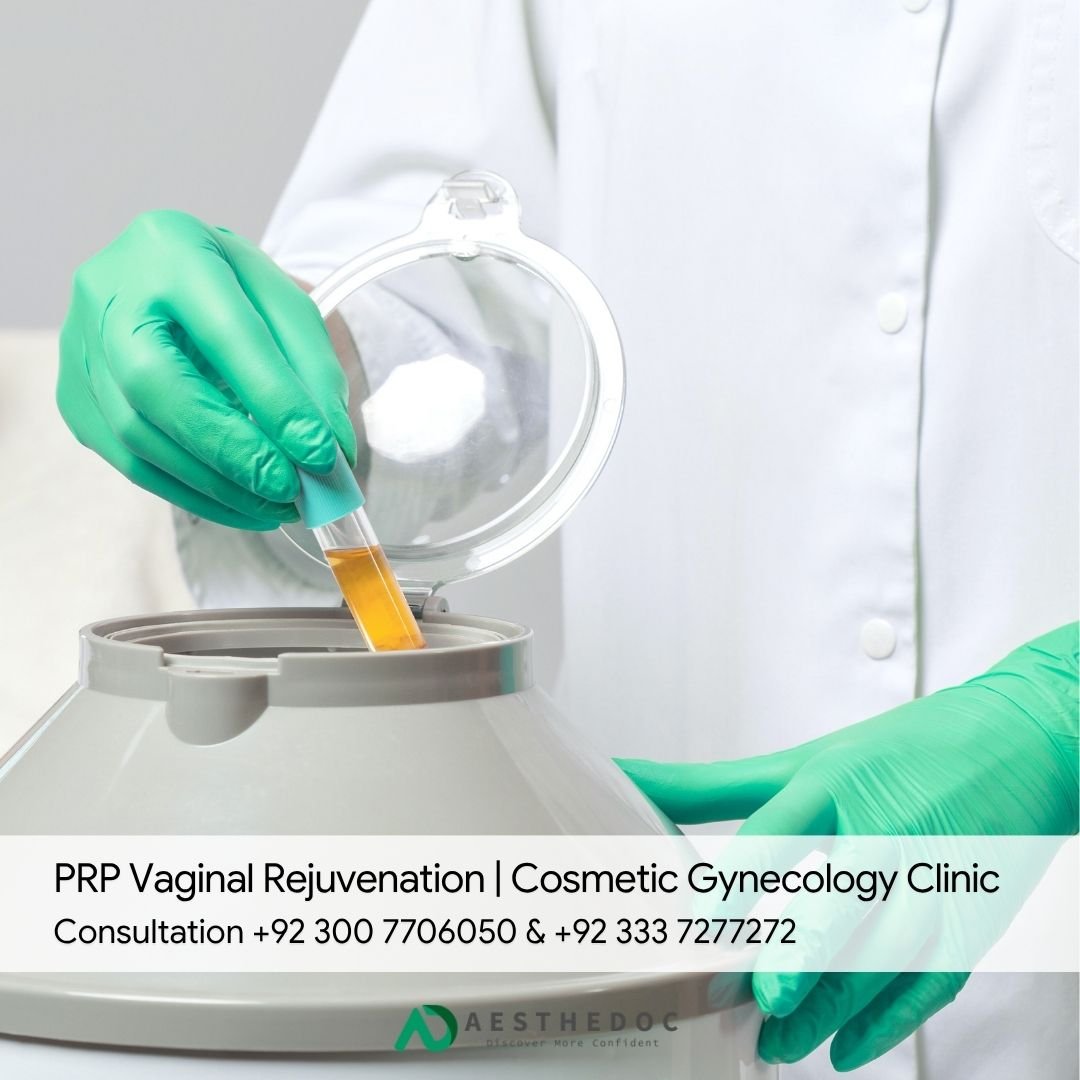
PRP vaginal rejuvenation is a regenerative aesthetic gynecology treatment that uses Platelet-Rich Plasma (PRP) derived from the patient’s own blood to improve vaginal tissue health, lubrication, sensitivity, and overall functional wellness.
This treatment is widely used in modern intimate medicine because it activates the body’s natural healing mechanisms without surgery, implants, or foreign substances. PRP contains powerful growth factors that support tissue repair, collagen production, and improved blood circulation in vaginal tissues.
It is often used as a standalone therapy or combined with other procedures such as laser vaginal rejuvenation or stem cell-based treatments.
Understanding PRP (Platelet-Rich Plasma)
PRP is a concentrated form of blood plasma that contains a high number of platelets. These platelets are rich in growth factors responsible for:
- Tissue regeneration
- Collagen stimulation
- Wound healing
- Angiogenesis (new blood vessel formation)
- Cellular repair
When injected into targeted vaginal tissues, PRP enhances natural biological repair processes.
What Is PRP Vaginal Rejuvenation?
PRP vaginal rejuvenation is a minimally invasive procedure where PRP is injected into specific areas of the vaginal and vulvar region to improve:
- Vaginal lubrication
- Tissue elasticity
- Blood flow
- Nerve sensitivity
- Overall vaginal health
It is sometimes referred to as the “O-Shot” when focused on clitoral and sexual wellness enhancement.
How PRP Vaginal Rejuvenation Works
The treatment works through natural biological activation:
- Blood is drawn from the patient
- Platelets are separated using centrifugation
- PRP is prepared in concentrated form
- PRP is injected into targeted vaginal tissues
- Growth factors stimulate regeneration and healing
Over the following weeks, tissue quality gradually improves.
Indications for PRP Vaginal Rejuvenation
This treatment may be suitable for women experiencing:
Vaginal Dryness
Reduced natural lubrication due to hormonal or aging changes.
Reduced Sensitivity
Decreased nerve responsiveness in intimate areas.
Mild Vaginal Laxity
Early-stage loosening of vaginal tissues.
Postpartum Changes
Functional or tissue quality changes after childbirth.
General Intimate Discomfort
Reduced comfort during daily life or intimacy.
PRP Vaginal Rejuvenation Procedure Overview
Step 1: Consultation and Evaluation
A full medical assessment is performed to determine suitability and rule out contraindications.
Step 2: Blood Collection
A small amount of blood is drawn from the patient, similar to a routine lab test.
Step 3: PRP Preparation
Blood is processed using a centrifuge to separate platelet-rich plasma.
Step 4: Local Anesthesia
A topical numbing agent is applied to ensure comfort during the procedure.
Step 5: PRP Injection
PRP is carefully injected into targeted vaginal and/or clitoral regions depending on treatment goals.
Step 6: Post-Procedure Care
Patients receive guidance for recovery, hygiene, and activity recommendations.
Recovery After PRP Vaginal Rejuvenation
Recovery is usually fast due to its minimally invasive nature.
First 24–48 Hours
- Mild swelling or sensitivity
- Slight pressure sensation
First Week
- Gradual improvement begins
- No major downtime required
2–6 Weeks
- Noticeable improvement in lubrication
- Improved tissue responsiveness
- Enhanced comfort
Results improve gradually over time.
Benefits of PRP Vaginal Rejuvenation
Natural Regeneration
Uses the body’s own growth factors for healing.
Improved Lubrication
Enhances natural vaginal moisture.
Increased Sensitivity
Supports nerve and tissue responsiveness.
Better Tissue Health
Improves elasticity and vascular support.
Non-Surgical Treatment
No incisions or stitches required.
PRP Vaginal Rejuvenation vs O-Shot
PRP Vaginal Rejuvenation
- Focuses on vaginal walls and lubrication
- Improves overall tissue health
- Broader functional benefits
O-Shot
- Focuses on clitoral region and sexual response
- More targeted sensitivity enhancement
Both use PRP but differ in application areas.
Risks and Safety
PRP therapy is generally safe because it uses the patient’s own blood. Possible mild side effects include:
- Temporary swelling
- Mild bruising
- Sensitivity for a short duration
- Rare infection
Proper sterile technique minimizes risks significantly.
PRP Vaginal Rejuvenation Cost (Fixed Range as Requested)
Estimated Cost:
PKR 100,000 – PKR 180,000
Cost depends on:
- Number of PRP sessions required
- Treatment area (vaginal walls vs combined O-Shot)
- Combination with laser or stem cell therapy
- Clinic protocol and equipment
International Cost Comparison
| Country | Estimated Cost |
|---|---|
| Pakistan | PKR 100,000 – 180,000 |
| United States | USD 1,000 – 2,500 |
| United Kingdom | GBP 900 – 2,000 |
| Canada | CAD 1,200 – 3,000 |
| UAE | AED 4,000 – 10,000 |
| Turkey | USD 800 – 1,800 |
PRP Vaginal Rejuvenation vs Laser Treatment
PRP Therapy
- Biological regeneration
- Improves sensitivity and lubrication
- Works at cellular level
Laser Treatment
- Heat-based collagen stimulation
- Improves tightness
- More structural effect
Both can be combined for enhanced results.
Psychological Benefits
Patients often report:
- Improved confidence
- Better intimate comfort
- Reduced dryness concerns
- Enhanced quality of life
Who Is a Good Candidate?
Suitable candidates include women who:
- Experience vaginal dryness or laxity
- Prefer non-surgical treatment
- Are in good general health
- Have realistic expectations
- Seek natural regenerative therapy
Meet the Surgeon
Dr. Nadiya Tariq – Plastic Surgeon
Qualifications
- FCPS (Plastic Surgery) – CPSP
- MBBS – UHS Lahore
Registrations
- PMDC – Active
- Irish Medical Council – Active
Consultation at Aesthedoc Clinic
For confidential consultation and personalized treatment planning:
+92 300 7706050
info@aesthedoc.com
A tailored evaluation helps determine whether PRP alone or combination therapy is most suitable.
-
 Surgeries8 months ago
Hymen Repair Surgery
-

 Cosmetic Gynecology7 months ago
Cosmetic Gynecology Clinic
-
 Cosmetic Gynecology8 months ago
Hymenoplasty in Islamabad
-

 Cosmetic Gynecology8 months ago
Hymen Repair Surgery in Rawalpindi
-

 Cosmetic Gynecology7 months ago
Hymenoplasty Cost Worldwide
-
 Surgeries7 months ago
Virgin Tightening Surgery Before and After Pictures
-

 Surgeries8 months ago
Hymenoplasty Surgeon in Rawalpindi
-

 Surgeries7 months ago
How Much Does Hymen Restoration Cost?