
Cosmetic Gynecology
Perineal Tears Repair

Perineal tears are common during vaginal childbirth, occurring when the vaginal and perineal tissues stretch beyond their capacity. These tears can range from minor skin lacerations to deep muscle injuries involving the anal sphincter. Repair of perineal tears is essential for restoring vaginal and perineal function, comfort, and aesthetics.
In addition to medical repair, cosmetic and reconstructive perineal procedures are increasingly sought in Islamabad and Rawalpindi, helping women regain confidence, sexual satisfaction, and perineal integrity after childbirth.
What Are Perineal Tears?
A perineal tear is a laceration of the perineum during childbirth, extending from the vaginal opening toward the anus. These tears are classified by severity:
Classification of Perineal Tears
- First-Degree Tear
- Involves only the vaginal mucosa or perineal skin
- Minimal discomfort and quick healing
- Second-Degree Tear
- Involves vaginal muscles and perineal muscles
- Requires suturing for proper healing
- Third-Degree Tear
- Extends into the anal sphincter
- Can affect continence if not repaired properly
- Fourth-Degree Tear
- Extends into the rectal mucosa
- Requires complex surgical repair to restore anatomy and function
Causes of Perineal Tears
Perineal tears occur due to excessive stretching or trauma during childbirth:
- Large baby (macrosomia)
- Rapid or difficult delivery
- Instrument-assisted delivery (forceps or vacuum)
- First-time vaginal delivery (primiparity)
- Episiotomy extension
- Maternal position and tissue elasticity
Symptoms of Perineal Tears
- Vaginal or perineal pain after delivery
- Swelling and bruising in the perineal area
- Difficulty sitting or walking
- Bleeding or oozing from the perineum
- Discomfort during urination or bowel movements
- Painful intercourse postpartum
Importance of Repairing Perineal Tears
Repair is crucial for functional, aesthetic, and psychological reasons:
- Restores muscle integrity and vaginal tone
- Prevents urinary or fecal incontinence
- Minimizes pain, discomfort, and infection risk
- Improves sexual function and confidence
- Reduces scarring and cosmetic deformity
Perineal Tear Repair – Immediate Postpartum
Step 1: Assessment
- The obstetrician examines the perineum to determine tear degree
- Infection risk, bleeding, and tissue involvement assessed
Step 2: Anesthesia
- Local anesthesia for minor tears
- Regional or general anesthesia for severe tears
Step 3: Suturing
- Layered closure of vaginal mucosa, perineal muscles, and skin
- Absorbable sutures commonly used
- Muscle repair restores structural support
Step 4: Hemostasis and Dressing
- Bleeding controlled
- Sterile dressing applied
- Pain relief and hygiene instructions provided
Postpartum Recovery
First Week
- Swelling and mild pain are common
- Sitz baths recommended
- Analgesics prescribed for comfort
- Avoid strenuous activity
Weeks 2–3
- Sutures dissolve naturally
- Reduced swelling and bruising
- Light activities resume
Weeks 4–6
- Perineal tissue fully healed
- Sexual activity resumes after clearance
- Scar tissue softens and aesthetic contour improves
Cosmetic and Functional Repair
Some women seek cosmetic or reconstructive repair of perineal tears for enhanced aesthetics and comfort:
1. Perineoplasty
- Tightens perineal muscles
- Restores vaginal and perineal contour
- Improves sexual function
2. Vaginoplasty
- Rejuvenates vaginal canal
- Restores tone after stretching from childbirth
- Can be combined with perineal repair
3. Labiaplasty
- Symmetrical reshaping of labia minora or majora
- Corrects asymmetry caused by childbirth or perineal trauma
4. Scar Revision
- Corrects old perineal scars
- Improves aesthetics and comfort
- Reduces friction during intercourse
5. Monsplasty
- Pubic lift or reduction for harmonious lower genital contour
- Often combined with perineal repair
Timing of Cosmetic Perineal Repair
- Minor tears repaired immediately after childbirth
- Reconstructive or cosmetic repair may be performed 6–12 months postpartum after tissue stabilization
- Ideal timing ensures optimal healing and predictable results
Benefits of Perineal Tear Repair
- Restores vaginal and perineal anatomy
- Improves sexual function and comfort
- Minimizes pain and infection risk
- Reduces scarring and aesthetic deformities
- Enhances self-esteem and confidence
Complications
When performed by a board-certified surgeon, risks are minimal:
- Swelling and bruising
- Temporary pain or discomfort
- Minor infection
- Scarring (minimal with careful suturing)
- Rare: urinary or fecal incontinence if deep tear not repaired correctly
Proper surgical technique and postoperative care reduce these risks.
Who Is an Ideal Candidate?
- Women with perineal tears postpartum
- Those experiencing pain, functional issues, or aesthetic concerns
- Physically healthy with realistic expectations
- Postpartum women after tissue stabilization (6–12 months) for elective cosmetic repair
Emotional and Psychological Benefits
- Increased confidence and comfort
- Reduced embarrassment during intimacy
- Enhanced sexual satisfaction
- Positive impact on postpartum body image and self-esteem
Perineal Tear Repair in Islamabad
At Aesthedoc Islamabad, patients benefit from:
- Modern surgical facilities
- Board-certified plastic and reconstructive surgeons
- Personalized consultation and treatment planning
- Postpartum and cosmetic perineal repair services
Perineal Tear Repair in Rawalpindi
At Aesthedoc Clinic Rawalpindi, patients from Bahria Town, DHA, and surrounding areas receive:
- Expert surgeons in perineal and vaginal repair
- Comprehensive post-delivery aesthetic restoration
- Confidential and professional care
- Combined functional and cosmetic surgery options
Meet Dr Nadia Tariq – Plastic Surgeon
Dr Nadia Tariq specializes in cosmetic gynecology and postpartum perineal repair, including perineal tear repair, vaginoplasty, and labiaplasty.
Academic Qualifications
- FCPS (Plastic Surgery) – College of Physicians & Surgeons Pakistan (CPSP), 2025
- MBBS – University of Health Sciences (UHS), Lahore, 2016
Professional Registrations
- Pakistan Medical & Dental Council (PMDC) – Active Registration
- Irish Medical Council (IMC) – Active Registration
Dr Tariq emphasizes:
- Safety, confidentiality, and patient comfort
- Functional and aesthetic outcomes
- Personalized, evidence-based care
Preparing for Perineal Tear Repair
- Avoid smoking or blood-thinning medications
- Maintain hygiene
- Complete preoperative assessment
- Follow surgeon’s preoperative instructions
- Ensure postpartum tissue stabilization for elective repair
Postoperative Care
- Keep perineal area clean
- Avoid sexual activity until cleared
- Wear loose-fitting clothing
- Take prescribed medications
- Follow-up visits to monitor healing and aesthetics
Aesthedoc Islamabad
Instagram: @aesthe_doc
F11 Markaz Islamabad
Contact: 03337277272
Aesthedoc Clinic Rawalpindi
Instagram: @aesthedocclinic
3rd Floor, Rajas United Heights
Opposite Future World School
Bahria Town Phase 8, Rawalpindi, Pakistan
Contact: 03007706050
Surgeon: Dr Nadia Tariq – Plastic Surgeon










Female intimate surgery is an umbrella term used in modern aesthetic and reconstructive gynecology to describe a wide range of surgical and minimally invasive procedures designed to improve the functional, structural, and aesthetic aspects of the female genital area.
It includes both medically indicated reconstructive surgeries and elective cosmetic enhancements. These procedures are performed based on individual anatomy, symptoms, and patient goals after proper clinical evaluation.
In recent years, advancements in surgical techniques, regenerative medicine, and laser technology have made intimate surgery safer, more precise, and more customizable than ever before.
Understanding Female Intimate Surgery
Female intimate surgery is not a single operation. It is a category of procedures that may include:
- Vaginal tightening surgery (vaginoplasty)
- Labia reshaping surgery (labiaplasty)
- Clitoral hood reduction (hoodoplasty)
- Perineal repair (perineoplasty)
- Mons pubis reduction (monsplasty)
- Fat grafting and volume restoration procedures
- Laser and regenerative therapies (as adjuncts)
Each procedure addresses a specific anatomical or functional concern.
Why Female Intimate Surgery Is Performed
Women may consider intimate surgery for a combination of functional, medical, and aesthetic reasons.
Post-Childbirth Changes
Childbirth can lead to:
- Vaginal laxity
- Perineal tearing
- Changes in labial shape
- Reduced tissue support
Aging-Related Changes
Natural aging may result in:
- Loss of elasticity
- Reduced collagen production
- Tissue thinning
- Volume loss
Functional Concerns
- Discomfort during movement or intimacy
- Reduced tissue support
- Irritation or friction
Aesthetic Concerns
- Asymmetry
- Excess or deficient tissue
- Changes in contour balance
Types of Female Intimate Surgery
1. Vaginal Tightening Surgery
Restores internal muscle tone and structural support of the vaginal canal.
2. Labiaplasty
Reshapes labia minora or majora for symmetry and comfort.
3. Hoodoplasty
Reduces excess clitoral hood tissue while preserving sensitivity.
4. Perineoplasty
Repairs and strengthens the perineal body after childbirth or trauma.
5. Monsplasty
Removes or reshapes excess fat in the pubic region for better contour balance.
6. Fat Grafting Procedures
Restores volume in labia majora using autologous fat transfer.
Treatment Planning and Customization
Female intimate surgery is always individualized. A complete treatment plan is based on:
- Vaginal muscle tone assessment
- External genital anatomy
- Functional concerns
- Skin elasticity
- Patient expectations and goals
A combination approach is often used for comprehensive results.
Surgical Procedure Overview
Step 1: Consultation and Examination
A detailed medical evaluation is performed to assess anatomy and determine suitable procedures.
Step 2: Anesthesia
Depending on the procedure combination:
- Local anesthesia with sedation
- General anesthesia for complex surgeries
Step 3: Surgical Execution
The selected procedures are performed with precision using advanced surgical techniques to ensure safety and natural results.
Step 4: Tissue Reconstruction
Muscles, skin, and soft tissues are reshaped to restore natural anatomy and symmetry.
Step 5: Closure and Dressing
Absorbable sutures are used, and post-operative care instructions are provided.
Recovery After Female Intimate Surgery
Recovery varies depending on procedures performed.
First Week
- Swelling and mild discomfort
- Rest and limited movement recommended
Weeks 2–3
- Gradual reduction in swelling
- Improved comfort and mobility
Weeks 4–6
- Significant healing progress
- Return to most normal activities
Full Recovery
Final results stabilize as tissues heal completely and collagen remodeling occurs.
Benefits of Female Intimate Surgery
Functional Improvement
Enhances structural support and comfort.
Aesthetic Enhancement
Improves symmetry and appearance of intimate area.
Long-Term Results
Surgical corrections provide durable outcomes.
Personalized Treatment
Each plan is tailored to patient anatomy and goals.
Improved Confidence
Many patients report better body confidence and comfort.
Risks and Considerations
As with all surgical procedures, possible risks include:
- Temporary swelling
- Bruising
- Infection (rare)
- Scarring
- Asymmetry
- Delayed healing
These risks are minimized when procedures are performed by experienced specialists with proper post-operative care.
Female Intimate Surgery Cost (Fixed Range as Requested)
Estimated Cost:
PKR 120,000 – PKR 250,000
Cost depends on:
- Number of procedures combined
- Surgical complexity
- Tissue condition
- Duration of surgery
International Cost Comparison
| Country | Estimated Cost |
|---|---|
| Pakistan | PKR 120,000 – 250,000 |
| United States | USD 4,000 – 10,000 |
| United Kingdom | GBP 3,500 – 8,000 |
| Canada | CAD 5,000 – 10,000 |
| UAE | AED 15,000 – 30,000 |
| Turkey | USD 2,500 – 6,000 |
Psychological and Emotional Impact
Patients often report:
- Improved self-confidence
- Better intimate comfort
- Enhanced body image
- Improved quality of life
Who Is a Good Candidate?
Suitable candidates include women who:
- Have postpartum anatomical changes
- Experience functional discomfort
- Desire aesthetic improvement
- Are in good general health
- Have realistic expectations
Meet the Surgeon
Dr. Nadiya Tariq – Plastic Surgeon
Qualifications
- FCPS (Plastic Surgery) – CPSP
- MBBS – UHS Lahore
Registrations
- PMDC – Active
- Irish Medical Council – Active
Consultation at Aesthedoc Clinic
For confidential evaluation and personalized treatment planning:
+92 300 7706050
info@aesthedoc.com
A comprehensive consultation ensures ethical, safe, and medically appropriate treatment selection.
Designer vagina surgery is a non-medical marketing term used to describe a combination of aesthetic gynecology procedures aimed at reshaping, tightening, and enhancing the appearance and function of the female intimate area. It is not a single surgical procedure, but rather a customized surgical plan that may include multiple reconstructive and cosmetic techniques depending on the patient’s anatomy and goals.
In modern aesthetic medicine, this approach is designed to restore balance, symmetry, and functional comfort while also improving overall intimate aesthetics. The procedures involved are always individualized, based on clinical assessment and medical indications.
Understanding Designer Vagina Surgery
Designer vagina surgery typically refers to a combination of procedures such as:
- Vaginal tightening surgery (vaginoplasty)
- Labiaplasty (labia reshaping)
- Hoodoplasty or clitoral hood reduction
- Perineoplasty (perineal repair)
- Monsplasty (pubic contouring)
The term “designer” does not refer to artificial alteration but to a personalized surgical plan tailored to the patient’s anatomy.
Why Women Consider Designer Vagina Surgery
Women may consider combined intimate procedures for several reasons:
Post-Childbirth Changes
Vaginal delivery can lead to:
- Tissue laxity
- Muscle separation
- Perineal stretching
- Changes in labial shape
Aging-Related Changes
Natural aging may result in:
- Reduced elasticity
- Loss of volume
- Changes in skin texture
Aesthetic Concerns
Some women seek improved:
- Symmetry of labia
- External genital appearance
- Overall contour balance
Functional Concerns
- Discomfort during physical activity
- Reduced tissue support
- Irritation due to excess tissue
What Procedures Are Included in a Designer Vagina Plan
A customized treatment plan may include:
1. Vaginoplasty
Tightens internal vaginal muscles to improve structural support.
2. Labiaplasty
Reshapes inner or outer labia for symmetry and comfort.
3. Hoodoplasty
Refines excess clitoral hood tissue while preserving sensitivity.
4. Perineoplasty
Repairs and strengthens the perineal body.
5. Monsplasty
Removes or reshapes excess pubic fat for improved contour.
Procedure Planning and Customization
Each designer vaginal surgery plan begins with a detailed consultation where the surgeon evaluates:
- Vaginal muscle tone
- External anatomy symmetry
- Skin elasticity
- Functional concerns
- Patient expectations
A tailored combination of procedures is then recommended for optimal outcomes.
Surgical Procedure Overview
Step 1: Pre-Surgical Evaluation
Medical history, physical examination, and treatment planning are completed.
Step 2: Anesthesia
Designer vaginal surgery is usually performed under:
- Local anesthesia with sedation, or
- General anesthesia depending on complexity
Step 3: Surgical Execution
Multiple procedures are performed in a single session or staged approach, depending on safety and complexity.
Step 4: Tissue Reconstruction
Muscles, skin, and soft tissues are carefully reshaped and sutured for natural anatomical balance.
Step 5: Recovery Plan
A structured post-operative care plan is provided for healing and comfort.
Recovery After Designer Vagina Surgery
Recovery depends on the combination of procedures performed.
First Week
- Swelling and mild discomfort
- Rest recommended
- Limited physical activity
Weeks 2–3
- Gradual reduction in swelling
- Improved comfort
- Light activities may resume
Weeks 4–6
- Significant healing progress
- Return to normal routine possible
Full Recovery
Final results typically stabilize as tissues fully heal and collagen remodeling completes.
Benefits of Designer Vagina Surgery
Complete Intimate Rejuvenation
Addresses both functional and aesthetic concerns.
Improved Vaginal Tightness
Enhances muscle tone and structural support.
Better Aesthetic Symmetry
Improves balance of external genital appearance.
Enhanced Comfort
Reduces discomfort caused by excess or lax tissue.
Customized Results
Tailored surgical approach based on individual anatomy.
Risks and Considerations
As with any surgical procedure, potential risks include:
- Temporary swelling
- Bruising
- Infection (rare)
- Scarring
- Asymmetry
- Delayed healing
Choosing an experienced specialist significantly reduces complication risks.
Designer Vagina Surgery Cost (Fixed Range as Requested)
Estimated Cost:
PKR 150,000 – PKR 250,000
Cost depends on:
- Number of procedures combined
- Surgical complexity
- Tissue condition
- Duration of surgery
International Cost Comparison
| Country | Estimated Cost |
|---|---|
| Pakistan | PKR 150,000 – 250,000 |
| United States | USD 4,000 – 10,000 |
| United Kingdom | GBP 3,500 – 8,000 |
| Canada | CAD 5,000 – 10,000 |
| UAE | AED 15,000 – 30,000 |
| Turkey | USD 2,500 – 6,000 |
Psychological and Emotional Impact
Patients often report:
- Improved body confidence
- Better intimate self-image
- Increased comfort in daily life
- Enhanced relationship satisfaction
Who Is a Good Candidate?
Suitable candidates include women who:
- Experience multiple postpartum changes
- Have combined aesthetic and functional concerns
- Are in good general health
- Have realistic expectations
- Desire comprehensive rejuvenation
Meet the Surgeon
Dr. Nadiya Tariq – Plastic Surgeon
Qualifications
- FCPS (Plastic Surgery) – CPSP
- MBBS – UHS Lahore
Registrations
- PMDC – Active
- Irish Medical Council – Active
Consultation at Aesthedoc Clinic
For confidential consultation and personalized treatment planning:
+92 300 7706050
info@aesthedoc.com
A complete evaluation ensures a safe, ethical, and medically appropriate treatment plan tailored to individual needs.
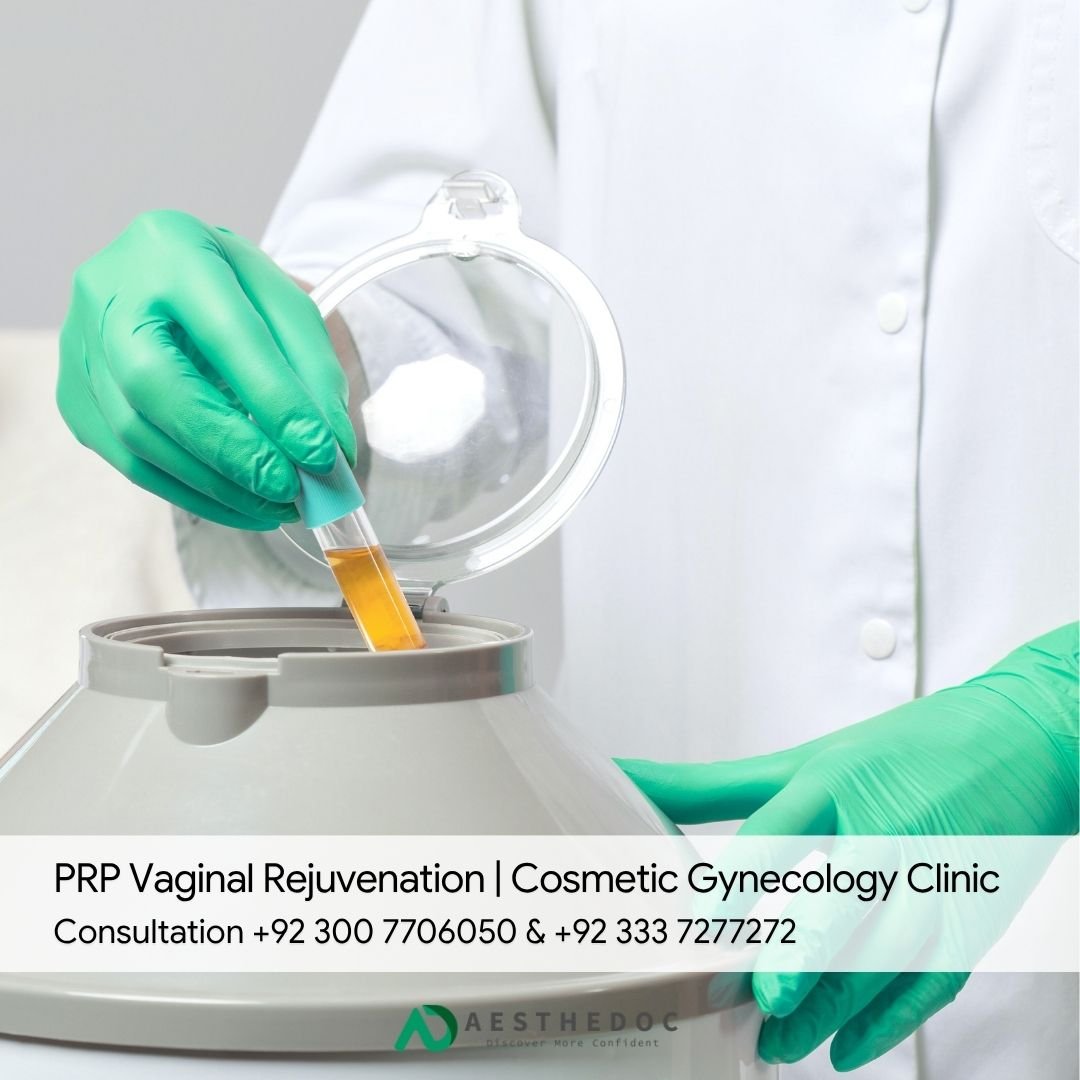
PRP vaginal rejuvenation is a regenerative aesthetic gynecology treatment that uses Platelet-Rich Plasma (PRP) derived from the patient’s own blood to improve vaginal tissue health, lubrication, sensitivity, and overall functional wellness.
This treatment is widely used in modern intimate medicine because it activates the body’s natural healing mechanisms without surgery, implants, or foreign substances. PRP contains powerful growth factors that support tissue repair, collagen production, and improved blood circulation in vaginal tissues.
It is often used as a standalone therapy or combined with other procedures such as laser vaginal rejuvenation or stem cell-based treatments.
Understanding PRP (Platelet-Rich Plasma)
PRP is a concentrated form of blood plasma that contains a high number of platelets. These platelets are rich in growth factors responsible for:
- Tissue regeneration
- Collagen stimulation
- Wound healing
- Angiogenesis (new blood vessel formation)
- Cellular repair
When injected into targeted vaginal tissues, PRP enhances natural biological repair processes.
What Is PRP Vaginal Rejuvenation?
PRP vaginal rejuvenation is a minimally invasive procedure where PRP is injected into specific areas of the vaginal and vulvar region to improve:
- Vaginal lubrication
- Tissue elasticity
- Blood flow
- Nerve sensitivity
- Overall vaginal health
It is sometimes referred to as the “O-Shot” when focused on clitoral and sexual wellness enhancement.
How PRP Vaginal Rejuvenation Works
The treatment works through natural biological activation:
- Blood is drawn from the patient
- Platelets are separated using centrifugation
- PRP is prepared in concentrated form
- PRP is injected into targeted vaginal tissues
- Growth factors stimulate regeneration and healing
Over the following weeks, tissue quality gradually improves.
Indications for PRP Vaginal Rejuvenation
This treatment may be suitable for women experiencing:
Vaginal Dryness
Reduced natural lubrication due to hormonal or aging changes.
Reduced Sensitivity
Decreased nerve responsiveness in intimate areas.
Mild Vaginal Laxity
Early-stage loosening of vaginal tissues.
Postpartum Changes
Functional or tissue quality changes after childbirth.
General Intimate Discomfort
Reduced comfort during daily life or intimacy.
PRP Vaginal Rejuvenation Procedure Overview
Step 1: Consultation and Evaluation
A full medical assessment is performed to determine suitability and rule out contraindications.
Step 2: Blood Collection
A small amount of blood is drawn from the patient, similar to a routine lab test.
Step 3: PRP Preparation
Blood is processed using a centrifuge to separate platelet-rich plasma.
Step 4: Local Anesthesia
A topical numbing agent is applied to ensure comfort during the procedure.
Step 5: PRP Injection
PRP is carefully injected into targeted vaginal and/or clitoral regions depending on treatment goals.
Step 6: Post-Procedure Care
Patients receive guidance for recovery, hygiene, and activity recommendations.
Recovery After PRP Vaginal Rejuvenation
Recovery is usually fast due to its minimally invasive nature.
First 24–48 Hours
- Mild swelling or sensitivity
- Slight pressure sensation
First Week
- Gradual improvement begins
- No major downtime required
2–6 Weeks
- Noticeable improvement in lubrication
- Improved tissue responsiveness
- Enhanced comfort
Results improve gradually over time.
Benefits of PRP Vaginal Rejuvenation
Natural Regeneration
Uses the body’s own growth factors for healing.
Improved Lubrication
Enhances natural vaginal moisture.
Increased Sensitivity
Supports nerve and tissue responsiveness.
Better Tissue Health
Improves elasticity and vascular support.
Non-Surgical Treatment
No incisions or stitches required.
PRP Vaginal Rejuvenation vs O-Shot
PRP Vaginal Rejuvenation
- Focuses on vaginal walls and lubrication
- Improves overall tissue health
- Broader functional benefits
O-Shot
- Focuses on clitoral region and sexual response
- More targeted sensitivity enhancement
Both use PRP but differ in application areas.
Risks and Safety
PRP therapy is generally safe because it uses the patient’s own blood. Possible mild side effects include:
- Temporary swelling
- Mild bruising
- Sensitivity for a short duration
- Rare infection
Proper sterile technique minimizes risks significantly.
PRP Vaginal Rejuvenation Cost (Fixed Range as Requested)
Estimated Cost:
PKR 100,000 – PKR 180,000
Cost depends on:
- Number of PRP sessions required
- Treatment area (vaginal walls vs combined O-Shot)
- Combination with laser or stem cell therapy
- Clinic protocol and equipment
International Cost Comparison
| Country | Estimated Cost |
|---|---|
| Pakistan | PKR 100,000 – 180,000 |
| United States | USD 1,000 – 2,500 |
| United Kingdom | GBP 900 – 2,000 |
| Canada | CAD 1,200 – 3,000 |
| UAE | AED 4,000 – 10,000 |
| Turkey | USD 800 – 1,800 |
PRP Vaginal Rejuvenation vs Laser Treatment
PRP Therapy
- Biological regeneration
- Improves sensitivity and lubrication
- Works at cellular level
Laser Treatment
- Heat-based collagen stimulation
- Improves tightness
- More structural effect
Both can be combined for enhanced results.
Psychological Benefits
Patients often report:
- Improved confidence
- Better intimate comfort
- Reduced dryness concerns
- Enhanced quality of life
Who Is a Good Candidate?
Suitable candidates include women who:
- Experience vaginal dryness or laxity
- Prefer non-surgical treatment
- Are in good general health
- Have realistic expectations
- Seek natural regenerative therapy
Meet the Surgeon
Dr. Nadiya Tariq – Plastic Surgeon
Qualifications
- FCPS (Plastic Surgery) – CPSP
- MBBS – UHS Lahore
Registrations
- PMDC – Active
- Irish Medical Council – Active
Consultation at Aesthedoc Clinic
For confidential consultation and personalized treatment planning:
+92 300 7706050
info@aesthedoc.com
A tailored evaluation helps determine whether PRP alone or combination therapy is most suitable.
-
 Surgeries8 months ago
Hymen Repair Surgery
-

 Cosmetic Gynecology7 months ago
Cosmetic Gynecology Clinic
-
 Cosmetic Gynecology8 months ago
Hymenoplasty in Islamabad
-

 Cosmetic Gynecology8 months ago
Hymen Repair Surgery in Rawalpindi
-

 Cosmetic Gynecology7 months ago
Hymenoplasty Cost Worldwide
-
 Surgeries7 months ago
Virgin Tightening Surgery Before and After Pictures
-

 Surgeries8 months ago
Hymenoplasty Surgeon in Rawalpindi
-

 Surgeries7 months ago
How Much Does Hymen Restoration Cost?