Hymenoplasty
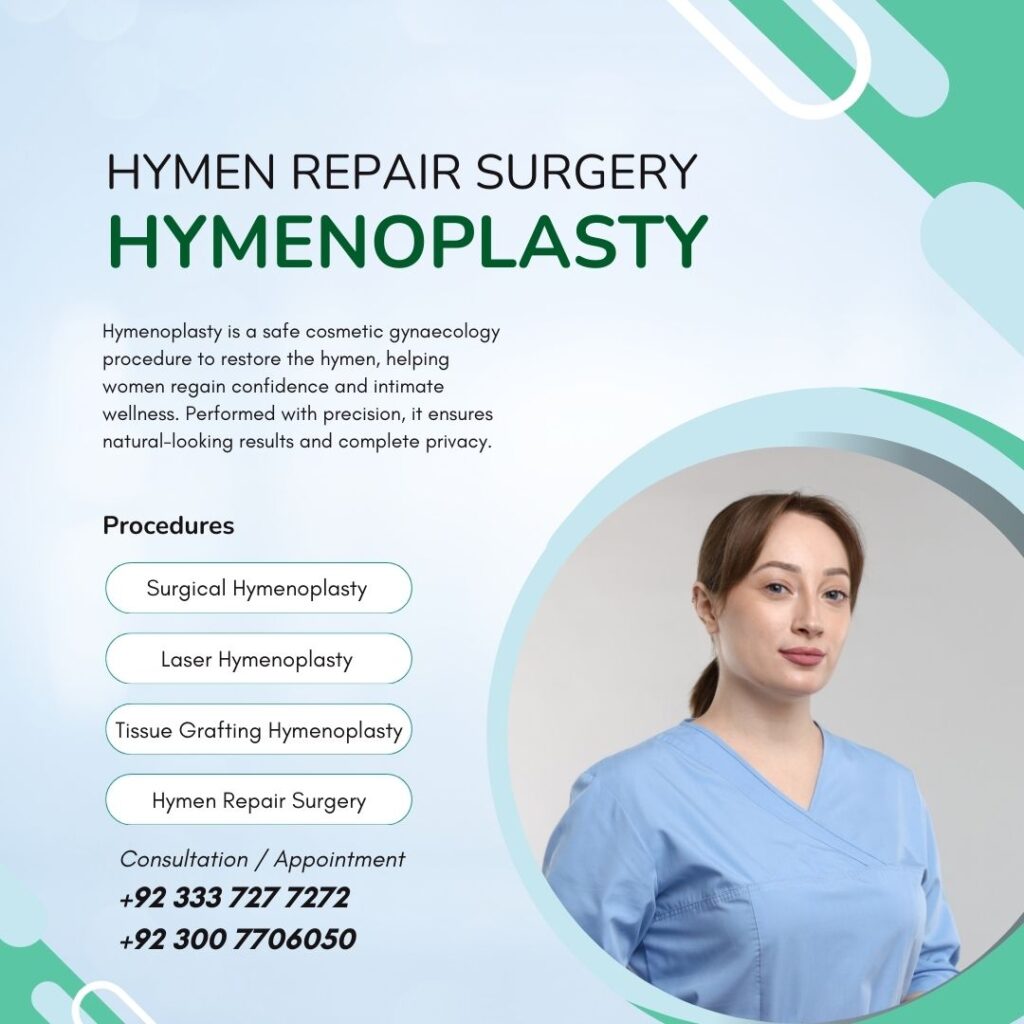
Hymenoplasty, also known as hymen repair surgery or hymen reconstruction, is a minor reconstructive gynecological procedure performed to repair or recreate the hymenal tissue. Women may consider this procedure for a variety of personal, cultural, emotional, or reconstructive reasons. Regardless of the motivation, every woman deserves respectful, confidential, evidence-based medical care and the opportunity to make informed decisions about her health.
At Cosmetic Gynecology Clinic, we understand that choosing to undergo hymenoplasty is a deeply personal decision. Our team provides confidential consultations, individualized treatment planning, and compassionate care in a safe clinical environment. Every consultation is conducted with complete respect for patient privacy, ensuring women feel comfortable discussing their concerns without fear of judgment.
Women from Islamabad, Rawalpindi, Lahore, Multan, Peshawar, Bahawalpur, Khanewal, Vehari, Lodhran, Muzaffargarh, Dera Ghazi Khan, Rahim Yar Khan, Sahiwal, and many other cities across Pakistan visit the clinic for professional evaluation regarding hymen reconstruction and other cosmetic gynecology procedures.
Our multidisciplinary team includes experienced plastic surgeons, cosmetic gynecologists, and reconstructive surgeons who work together to provide evidence-based treatment tailored to each patient’s individual anatomy and medical needs.
What Is Hymenoplasty?
Hymenoplasty is a surgical procedure that repairs or reconstructs the hymenal tissue located at the entrance of the vagina. The procedure aims to recreate the natural appearance of the hymenal ring using delicate microsurgical techniques and fine absorbable sutures.
Contrary to many common misconceptions, the hymen is not a solid membrane that completely covers the vaginal opening. Instead, it is a thin fold of elastic mucosal tissue that naturally contains one or more openings, allowing menstrual blood to pass normally.
The appearance, thickness, elasticity, and shape of the hymen vary greatly from one woman to another. Some women naturally have very little hymenal tissue, while others have tissue that is highly elastic and may stretch considerably without tearing.
Modern medical science recognizes that hymenal anatomy is highly variable and that the appearance or absence of hymenal tissue cannot be used to determine a woman’s sexual history. Changes to the hymen may occur due to many causes, making it medically unreliable as an indicator of virginity.
Understanding the Hymen
The hymen is a normal anatomical structure formed from mucosal tissue during fetal development. It is positioned around the vaginal opening and has no known essential physiological function after birth.
Medical research has shown that hymenal anatomy differs significantly between individuals. Some women are born with minimal hymenal tissue, while others have more prominent or elastic tissue. These differences are completely normal and represent natural anatomical variation.
The hymen may also change throughout life due to hormonal influences, puberty, childbirth, aging, and routine physical activities.
Common reasons for changes in hymenal tissue include:
- Vigorous physical exercise
- Cycling
- Horse riding
- Gymnastics
- Dancing
- Sports participation
- Yoga
- Tampon use
- Menstrual cup insertion
- Medical examinations
- Minor accidental injuries
- Natural stretching over time
Because of these natural variations, healthcare professionals cannot determine whether a woman has engaged in physical intercourse solely by examining the hymen.
Normal Types of Hymen
Several normal anatomical variations of the hymen exist, all of which are considered healthy.
Annular Hymen
The annular hymen forms a circular ring around the vaginal opening. This is one of the most commonly observed anatomical variations.
Crescentic Hymen
The crescentic hymen resembles a half-moon shape and is frequently encountered during gynecological examinations.
Fimbriated Hymen
This variation has naturally folded or fringed edges, giving it an irregular appearance while remaining entirely normal.
Septate Hymen
A septate hymen contains a thin band of tissue dividing the vaginal opening into two smaller openings.
Cribriform Hymen
The cribriform hymen contains several small openings rather than one central opening. In some cases, this variation may require minor surgical correction if it interferes with menstrual flow.
Each of these anatomical forms is considered a normal variation of female anatomy.
What Is Hymen Reconstruction?
Hymen reconstruction involves carefully repairing or recreating the hymenal tissue using fine absorbable sutures. The surgical approach depends on the amount of remaining hymenal tissue and each patient’s unique anatomy.
The goal of the procedure is anatomical reconstruction while preserving surrounding healthy tissue.
Depending on the individual case, the surgeon may:
- Repair existing hymenal remnants
- Reconstruct the hymenal ring
- Use adjacent vaginal mucosal tissue when necessary
- Restore a natural anatomical appearance
The surgical technique is individualized for every patient following a thorough consultation and examination.
Why Do Women Consider Hymenoplasty?
The decision to undergo hymenoplasty is highly personal. Women seek consultation for a variety of reasons, and every patient deserves respectful, confidential, and non-judgmental medical care.
Personal Choice
Many women choose hymenoplasty as a personal decision related to their own sense of privacy, confidence, or wellbeing.
Every woman has the right to make informed decisions regarding her own body after understanding the benefits, limitations, and potential risks of surgery.
Cultural and Social Considerations
In some communities and cultural traditions, hymenal integrity carries symbolic significance before marriage.
Women may seek hymen reconstruction based on their own cultural values, family expectations, or personal beliefs. Healthcare professionals should provide accurate medical information while respecting each patient’s autonomy and confidentiality.
Emotional Recovery
Some women consider reconstructive surgery following emotionally distressing experiences or trauma. In these situations, comprehensive care may include psychological support and counseling in addition to surgical consultation.
The decision to undergo surgery should always be voluntary and made without coercion.
Reconstructive Reasons
Occasionally, hymenal repair may be considered after accidental injury, certain medical conditions, or previous surgical procedures affecting the vaginal opening.
In such cases, hymenoplasty may form part of a broader reconstructive treatment plan.
Types of Hymenoplasty Procedures
There is no single technique suitable for every patient. The most appropriate surgical method depends on the patient’s anatomy, the condition of the remaining hymenal tissue, and the desired reconstructive outcome.
Simple Hymen Repair
Simple hymen repair is performed when sufficient hymenal tissue remains.
During the procedure, the surgeon carefully identifies the remaining hymenal edges and approximates them using very fine absorbable sutures.
Because the natural tissue is preserved, this approach generally requires less operating time and offers straightforward healing.
This technique is commonly recommended for women with adequate hymenal remnants.
Advanced Hymen Reconstruction
Some patients have minimal or absent hymenal tissue due to natural anatomy, previous injuries, or other reasons.
In these cases, advanced microsurgical reconstruction may be recommended.
The surgeon carefully uses nearby vaginal mucosal tissue to recreate a natural-appearing hymenal ring while preserving normal anatomy.
This technique requires meticulous surgical planning, delicate tissue handling, and expertise in reconstructive gynecological surgery.
Permanent Hymenoplasty
Permanent hymenoplasty refers to reconstructive techniques designed to restore hymenal tissue using the patient’s own tissue. The reconstructed tissue heals naturally as part of the vaginal anatomy.
Healing depends on the patient’s tissue quality, surgical technique, and adherence to postoperative instructions.
Temporary Hymenoplasty
Temporary hymenoplasty is a less commonly discussed approach in which the repair is intended for a shorter period before naturally dissolving. Suitability depends on individual circumstances, and not all patients are candidates.
During consultation, the surgeon explains the available options and recommends the most appropriate technique based on the patient’s anatomy and treatment goals.
Benefits of Hymenoplasty
When performed for appropriately selected patients by qualified surgeons, hymenoplasty may offer several potential benefits.
These include:
- Anatomical reconstruction of hymenal tissue
- Personalized treatment planning
- Day-care surgical procedure
- Minimal visible scarring
- Fine absorbable sutures
- Relatively short operating time
- Individualized postoperative care
- High level of patient confidentiality
- Modern microsurgical techniques
- Minimal downtime for most patients
The benefits vary from person to person and should be discussed during consultation.
Difference Between Hymen Repair and Hymen Reconstruction
Although these terms are often used interchangeably, they can describe slightly different surgical approaches.
Hymen Repair generally involves suturing together the remaining hymenal tissue when enough natural tissue is still present.
Hymen Reconstruction is a more advanced procedure used when little or no hymenal tissue remains. In such cases, nearby vaginal mucosal tissue may be utilized to recreate a natural-appearing hymenal ring.
The most suitable technique is determined after clinical evaluation.
Is Hymenoplasty Safe?
Hymenoplasty is generally considered a safe procedure when performed by an appropriately qualified plastic surgeon or cosmetic gynecologist in a sterile medical facility.
As with any surgical procedure, safety depends on several factors, including:
- Careful patient selection
- Proper preoperative assessment
- Sterile surgical techniques
- Experienced surgeon
- Appropriate anesthesia
- Patient compliance with postoperative instructions
- Regular follow-up care
Before recommending surgery, the healthcare team evaluates the patient’s overall health, reviews her medical history, and discusses the expected benefits and possible risks. Every patient receives individualized counseling so she can make an informed decision about treatment.
Consultation Before Hymenoplasty
A confidential consultation is the most important step before undergoing hymenoplasty. Every patient has different anatomy, expectations, medical history, and reasons for considering surgery. Therefore, treatment should always be individualized rather than following a one-size-fits-all approach.
At Aesthedoc Cosmetic Gynecology Clinic, consultations are conducted in a private, respectful, and confidential setting. Patients are encouraged to openly discuss their concerns and ask questions without fear of judgment.
During the consultation, your surgeon will explain the procedure, discuss realistic expectations, review possible alternatives when appropriate, and ensure you understand the benefits, limitations, and potential risks before making any decision.
What Happens During Your Consultation?
Your consultation may include:
- A detailed medical history
- Review of previous surgeries or medical conditions
- Discussion of medications and allergies
- Understanding your expectations and concerns
- A physical examination when clinically appropriate and with your consent
- Evaluation of remaining hymenal tissue
- Discussion of the most suitable surgical technique
- Explanation of anesthesia options
- Discussion of recovery and aftercare
- Opportunity to ask questions
Every consultation is individualized because no two patients have exactly the same anatomy or treatment goals.
Who Is a Good Candidate for Hymenoplasty?
A qualified healthcare professional will determine whether hymenoplasty is appropriate after a thorough evaluation.
In general, suitable candidates are women who:
- Are in good overall physical health
- Understand the purpose and limitations of the procedure
- Have realistic expectations
- Are free from untreated genital infections
- Can provide informed consent
- Are willing to follow postoperative instructions
Suitability is assessed individually, and surgery is only recommended when it is medically appropriate.
Who Should Delay or Avoid Surgery?
Although hymenoplasty is generally considered a safe procedure, it may not be suitable for everyone.
Your surgeon may recommend delaying surgery if you have:
- Active vaginal or urinary tract infections
- Uncontrolled diabetes
- Bleeding disorders
- Severe medical illness requiring further evaluation
- Pregnancy
- Untreated sexually transmitted infections
- Poor wound healing conditions
Patients with unrealistic expectations or those feeling pressured by others should also discuss these concerns during consultation, as counseling may be beneficial before making a decision.
Preparing for Hymenoplasty Surgery
Proper preparation contributes to a smoother surgical experience and recovery.
Your surgeon may advise you to:
- Inform the medical team about all medications and supplements.
- Discuss any allergies or previous reactions to anesthesia.
- Stop smoking if possible, as smoking may delay wound healing.
- Avoid certain medications, such as blood-thinning drugs, if advised by your physician.
- Maintain good personal hygiene before surgery.
- Arrange transportation home if sedation is planned.
- Follow any fasting instructions if required for anesthesia.
Every patient receives personalized preoperative instructions based on her medical history and planned procedure.
Preoperative Evaluation
Before surgery, your healthcare provider may perform a routine assessment to ensure the procedure can be carried out safely.
Depending on your health and medical history, this may include:
- General physical examination
- Blood pressure assessment
- Review of current medications
- Laboratory investigations when indicated
- Pregnancy testing if clinically appropriate
- Assessment for active infections
Not every patient requires the same investigations. The evaluation is tailored to individual clinical needs.
How Is Hymenoplasty Performed?
Hymenoplasty is usually performed as a day-care surgical procedure, meaning most patients return home on the same day.
Although the exact surgical technique varies depending on the patient’s anatomy, the procedure generally follows several standard steps.
Step 1 – Confidential Admission
The patient arrives at the clinic and completes the necessary admission process in a confidential setting.
Step 2 – Surgical Planning
The surgeon reviews the treatment plan, confirms the surgical approach, and answers any remaining questions before the procedure begins.
Step 3 – Administration of Anesthesia
The surgical area is anesthetized using the most appropriate technique for the planned procedure.
Step 4 – Reconstruction
Using delicate microsurgical instruments, the surgeon carefully repairs or reconstructs the hymenal tissue while preserving healthy surrounding tissue whenever possible.
Fine absorbable sutures are placed with meticulous attention to detail to support natural healing.
Step 5 – Final Inspection
Before completing the procedure, the reconstructed area is carefully examined to ensure satisfactory tissue approximation and hemostasis.
Step 6 – Recovery
After surgery, patients remain under observation for a short period before being discharged with detailed postoperative instructions.
How Long Does Hymenoplasty Take?
The duration depends on the complexity of reconstruction and the amount of remaining hymenal tissue.
In most cases, the procedure takes approximately:
30 to 60 minutes
More complex reconstructive cases may require additional operating time.
Anesthesia Options
Hymenoplasty may be performed using different forms of anesthesia depending on the patient’s needs and the complexity of the surgery.
These include:
Local Anesthesia
Many simple repairs can be performed comfortably using local anesthesia.
Local Anesthesia with Sedation
Some patients prefer mild sedation in addition to local anesthesia to reduce anxiety and improve comfort.
General Anesthesia
General anesthesia is generally reserved for selected cases or when additional procedures are performed simultaneously.
The most suitable option is determined during consultation.
Recovery After Hymenoplasty
Recovery is usually straightforward when patients follow their surgeon’s postoperative instructions carefully.
Healing rates vary from person to person depending on:
- Individual tissue healing
- Surgical technique
- Overall health
- Smoking status
- Postoperative care
- Presence of any medical conditions
Recovery Timeline
First 24 Hours
Patients may experience:
- Mild discomfort
- Light spotting
- Minor swelling
- Temporary tenderness
These symptoms are expected and usually improve with prescribed medications.
Days 2–3
Swelling often begins to decrease.
Most patients are able to:
- Walk comfortably
- Perform light household activities
- Resume routine daily tasks that do not involve strenuous activity
First Week
The surgical area continues healing.
Patients are generally advised to:
- Keep the area clean and dry
- Avoid strenuous exercise
- Wear comfortable clothing
- Take medications as prescribed
Second Week
Most postoperative swelling has improved significantly.
Absorbable sutures begin dissolving naturally.
Many patients feel considerably more comfortable during this stage.
Weeks 4–6
Healing continues beneath the surface.
The reconstructed tissue gradually matures, and patients may return to more normal activities according to their surgeon’s advice.
Weeks 6–8
Most healing is complete, although subtle tissue remodeling may continue for several additional weeks.
Every patient heals at a different rate, so recovery timelines may vary.
Postoperative Care Instructions
Following postoperative instructions carefully helps support proper healing.
Patients are commonly advised to:
- Keep the surgical area clean.
- Take prescribed medications exactly as directed.
- Avoid inserting anything into the vagina until approved by the surgeon.
- Avoid strenuous exercise during the early recovery period.
- Avoid heavy lifting.
- Wear loose-fitting cotton underwear.
- Drink adequate fluids.
- Eat a balanced diet rich in protein and vitamins.
- Attend all scheduled follow-up appointments.
Patients should contact their surgeon if they experience unusual symptoms such as excessive bleeding, fever, increasing pain, or signs of infection.
Possible Risks and Complications
Like all surgical procedures, hymenoplasty carries some degree of risk, although serious complications are uncommon when performed by experienced healthcare professionals using appropriate sterile techniques.
Potential risks include:
- Infection
- Minor bleeding
- Temporary swelling
- Bruising
- Pain or discomfort
- Delayed wound healing
- Wound separation
- Scar tissue formation
- Temporary sensitivity
- Allergic reaction to medications
- Rare need for revision surgery
Your surgeon will explain these risks during consultation and discuss ways to minimize them.
Does Hymenoplasty Affect Fertility?
No.
Hymenoplasty does not involve the uterus, ovaries, fallopian tubes, or cervix.
The procedure is limited to the hymenal tissue near the vaginal opening and therefore does not affect fertility.
Women can still conceive naturally after the procedure if there are no unrelated fertility issues.
Does Hymenoplasty Affect Menstrual Periods?
No.
Because the reconstructed hymen contains a normal opening, menstrual blood continues to pass naturally.
Hymenoplasty should not interfere with normal menstrual cycles.
Can Hymenoplasty Affect Future Pregnancy?
No.
Hymenoplasty does not affect the uterus or reproductive organs responsible for pregnancy.
Women can become pregnant and have normal pregnancies after hymenoplasty, provided there are no unrelated medical conditions affecting fertility or pregnancy.
Can Doctors Determine Virginity?
Modern medical science recognizes that there is no reliable medical examination that can determine whether a person has had physical intercourse.
The appearance of the hymen varies naturally among women and may change due to many reasons.
For this reason, healthcare professionals do not consider hymenal examination a valid method for determining physical history.
Can Doctors Tell If Someone Has Had Hymenoplasty?
Following complete healing, there is no examination that can determine with certainty whether a person has undergone hymenoplasty.
Healing patterns vary from one individual to another, and findings depend on anatomy, tissue characteristics, and clinical context. No examination can reliably establish a person’s sexual history or definitively confirm previous hymenoplasty.
Benefits of Choosing an Experienced Surgeon
The outcome of hymenoplasty depends on several factors, including:
- Careful patient selection
- Thorough consultation
- Appropriate surgical planning
- Meticulous microsurgical technique
- Gentle tissue handling
- Proper postoperative care
- Patient adherence to recovery instructions
Choosing a qualified surgeon helps support safe treatment and appropriate follow-up care.
Hymenoplasty Cost in Pakistan (Rs 85,000/- to Rs 175,000) PKR
One of the most common questions women ask during consultation is about the cost of hymenoplasty. The total cost varies from patient to patient because every procedure is individualized based on anatomy, the surgical technique required, anesthesia, and the complexity of reconstruction.
Rather than focusing solely on price, patients should consider the experience of the surgeon, the quality of the medical facility, patient safety, confidentiality, and postoperative follow-up care.
Factors That Influence the Cost
The cost of hymenoplasty may depend on several factors, including:
- Experience and qualifications of the surgeon
- Type of hymenoplasty (simple repair or advanced reconstruction)
- Complexity of the individual case
- Hospital or surgical facility charges
- Type of anesthesia used
- Preoperative investigations, if required
- Medications prescribed after surgery
- Number of follow-up visits
- Geographic location of the clinic
Patients should undergo a comprehensive consultation before receiving a personalized treatment plan and cost estimate.
Choosing the Right Surgeon for Hymenoplasty
Selecting a qualified and experienced surgeon is one of the most important decisions when considering hymenoplasty.
Patients should choose a surgeon who:
- Is registered with the Pakistan Medical & Dental Council (PMDC)
- Has formal training in plastic surgery or gynecology
- Performs procedures in a licensed medical facility
- Provides confidential consultations
- Explains the procedure honestly and clearly
- Discusses both benefits and limitations
- Uses modern sterile surgical techniques
- Offers postoperative follow-up care
- Respects patient privacy and informed decision-making
Choosing an experienced surgeon helps support safe treatment and realistic expectations.
Hymenoplasty Before Marriage
Some women choose to consult a surgeon before marriage for personal or cultural reasons. If surgery is being considered, it is advisable to schedule a consultation well in advance so that there is sufficient time for evaluation, treatment planning, and healing.
The exact recovery period varies from person to person, and the surgeon will provide individualized advice regarding postoperative care and activity restrictions.
Patients should avoid making assumptions about healing timelines and instead follow the guidance provided by their healthcare professional.
Temporary vs. Permanent Hymenoplasty
The terms temporary and permanent hymenoplasty are sometimes used in online discussions, but they can be misleading.
Permanent Hymenoplasty
Permanent hymenoplasty generally refers to reconstructive techniques using the patient’s own tissue. Once healing is complete, the reconstructed tissue becomes part of the normal anatomy.
Temporary Hymenoplasty
Some practitioners may describe a temporary approach that is intended for a shorter duration using specific suturing techniques. Suitability depends on individual anatomy and the surgeon’s clinical judgment.
Your surgeon will explain the available options, including the expected outcomes and limitations of each technique.
Benefits of Hymenoplasty
When performed for appropriately selected patients by qualified healthcare professionals, hymenoplasty may offer several potential benefits.
These may include:
- Reconstruction of hymenal tissue
- Individualized surgical planning
- Day-care procedure with same-day discharge in most cases
- Fine absorbable sutures that usually do not require removal
- Relatively short recovery period
- Personalized postoperative care
- High standards of patient confidentiality
- Modern microsurgical techniques
- Respectful, evidence-based treatment
Every patient is unique, and outcomes depend on individual anatomy, healing, and adherence to postoperative instructions.
Success Factors
Successful healing depends on multiple factors rather than any single surgical technique.
Important factors include:
- The surgeon’s experience
- Careful surgical planning
- Gentle tissue handling
- Good blood supply to the reconstructed tissue
- Following postoperative instructions
- Avoiding infection
- Attending scheduled follow-up appointments
- Maintaining good personal hygiene
- Avoiding strenuous activity during the early healing period
Following your surgeon’s recommendations supports optimal recovery.
Myths and Facts About Hymenoplasty
There are many misconceptions surrounding the hymen and hymenoplasty. Understanding the medical facts can help patients make informed decisions.
| Myth | Medical Fact |
|---|---|
| The hymen completely covers the vaginal opening. | The hymen normally has one or more openings that allow menstrual blood to pass. |
| Every woman has the same type of hymen. | Hymenal anatomy varies naturally from one individual to another. |
| Exercise cannot affect the hymen. | Physical activities such as cycling, gymnastics, and horse riding may alter hymenal tissue in some individuals. |
| Doctors can determine virginity by examining the hymen. | Modern medical science recognizes that no examination can reliably determine a person’s sexual history. |
| Every hymen tears during first intercourse. | Some hymens are naturally elastic and may stretch without tearing. |
| Hymenoplasty affects fertility. | Hymenoplasty does not involve the uterus, ovaries, or fallopian tubes and does not affect fertility. |
| All hymenoplasty procedures are the same. | Surgical techniques are individualized based on the patient’s anatomy and clinical findings. |
Why Choose Aesthedoc Cosmetic Gynecology Clinic?
At Aesthedoc Cosmetic Gynecology Clinic, patient safety, privacy, and compassionate care are at the center of every consultation.
Patients from across Pakistan trust Aesthedoc because of its commitment to:
- Strict patient confidentiality
- Respectful and compassionate consultations
- Experienced plastic surgeons and cosmetic gynecologists
- Individualized treatment planning
- Modern clinical facilities
- Sterile surgical environment
- Evidence-based medical care
- Advanced reconstructive techniques
- Comprehensive postoperative follow-up
- Ethical and transparent communication
Our goal is to help every patient make informed decisions while receiving professional medical care in a supportive environment.
Consultation, Appointments & Surgery
Our experienced plastic surgeons and cosmetic gynecologists are available for confidential consultations, clinical examinations, and surgical procedures in Islamabad, Rawalpindi, Peshawar, Lahore, and Multan. We provide personalized treatment plans, evidence-based care, and comprehensive pre- and post-operative support for patients seeking cosmetic gynecology procedures across Pakistan.
Contact: +92 300 7706050
WhatsApp: +92 333 7277272
Email: info@aesthedoc.com
Meet Our Specialists
Dr. Nadiya Tariq – Plastic Surgeon
Women in Islamabad, Rawalpindi, KPK (Khyber Pakhtunkhwa) and surrounding areas can consult Dr. Nadiya Tariq, an experienced plastic surgeon with expertise in reconstructive and aesthetic procedures.
Academic Qualifications
- FCPS (Plastic Surgery) – College of Physicians & Surgeons Pakistan (CPSP)
- MBBS – University of Health Sciences (UHS), Lahore
Professional Registrations
- Pakistan Medical & Dental Council (PMDC)
- Irish Medical Council (IMC)
Dr. Nadiya Tariq provides individualized treatment planning with a focus on patient privacy, safety, and evidence-based reconstructive surgery.
Dr. Naila Frukh – Cosmetic Gynecologist
Women from Multan, Bahawalpur, Lahore, Khanewal, Vehari, Lodhran, Muzaffargarh, Dera Ghazi Khan, Rahim Yar Khan, Sahiwal, and other cities in South Punjab can consult Dr. Naila Frukh for cosmetic gynecology procedures.
Qualifications
- MBBS – Nishtar Hospital, Multan (2015)
- WMO – Population Welfare Department (2016)
- FCPS (Obstetrics & Gynecology) – 2024
- Fellowship in Aesthetic Gynecology – American Board (2023)
Dr. Naila Frukh is committed to providing confidential consultations, evidence-based care, and respectful treatment tailored to each patient’s needs.
Cosmetic Gynecology Services at Aesthedoc Clinic
In addition to hymenoplasty, Aesthedoc offers a comprehensive range of cosmetic gynecology procedures, including:
- Vaginoplasty
- Labiaplasty
- Vaginal Rejuvenation
- Perineoplasty
- Monsplasty (Mons Pubis Reduction)
- Mons Pubis Liposuction
- Fat Transfer to Labia Majora
- Vaginal Reconstruction Surgery
- Obstetric Perineal Repair
- Rectocele Repair Surgery
- PRP for Vaginal Rejuvenation
- O-Shot
- G-Shot
- Stress Urinary Incontinence Treatments
- Mommy Makeover Procedures
Each treatment plan is personalized based on the patient’s anatomy, concerns, and goals.
Frequently Asked Questions (FAQs)
1. Is hymenoplasty a day-care procedure?
Yes. In most cases, patients return home on the same day.
2. How long does the surgery take?
The procedure usually takes 30 to 60 minutes, depending on the complexity of the reconstruction.
3. Is the surgery painful?
Anesthesia is used during the procedure. Mild discomfort during recovery is common and is usually manageable with prescribed medications.
4. How long does recovery take?
Recovery varies by individual. Many patients resume routine non-strenuous activities within a few days, while complete healing may take several weeks.
5. Will the stitches need to be removed?
No. Fine absorbable sutures are generally used and dissolve naturally over time.
6. Can I travel after surgery?
Your surgeon will advise you based on your individual recovery and travel plans.
7. Can I exercise after hymenoplasty?
Strenuous exercise should be avoided during the early healing period. Your surgeon will tell you when it is safe to resume physical activity.
8. Does hymenoplasty affect fertility?
No. The procedure does not affect the uterus, ovaries, or reproductive function.
9. Will hymenoplasty affect future pregnancy?
No. The surgery does not interfere with future pregnancies.
10. Is patient confidentiality maintained?
Yes. Confidentiality is a fundamental principle of medical care at Aesthedoc Clinic.
Book a Confidential Consultation
If you are considering hymenoplasty or would like more information about cosmetic gynecology procedures, you can schedule a confidential consultation with the experienced team at Aesthedoc Cosmetic Gynecology Clinic.
During your consultation, your surgeon will:
- Review your medical history
- Discuss your concerns and expectations
- Explain the available treatment options
- Outline the potential benefits and risks
- Provide personalized recommendations based on your individual needs
Our commitment is to provide ethical, respectful, and evidence-based care in a private and supportive environment.
Conclusion
Hymenoplasty is a specialized reconstructive procedure that may be considered for personal, cultural, emotional, or reconstructive reasons. Because every woman’s anatomy and circumstances are unique, treatment should always begin with a confidential consultation and a thorough medical evaluation.
At Aesthedoc Cosmetic Gynecology Clinic, our experienced plastic surgeons and cosmetic gynecologists are dedicated to providing compassionate, evidence-based care using modern reconstructive techniques. From the initial consultation through recovery, patient privacy, informed consent, and individualized treatment remain our highest priorities.
If you are considering hymenoplasty, we encourage you to seek advice from a qualified healthcare professional who can answer your questions, discuss your options, and help you make an informed decision that is right for you.
