
Cosmetic Gynecology
Hymenoplasty in Rawalpindi


Concerns related to intimate wellness, confidence, privacy, and personal comfort are deeply personal. Many women silently search for information about hymen repair surgery because they want clarity, confidentiality, and medically accurate guidance before making a decision. Whether the reason is emotional healing, cultural expectations, personal confidence, relationship concerns, or restoration after trauma, childbirth, sports injuries, or physical activity, hymenoplasty has become one of the most requested intimate surgical procedures in modern cosmetic gynecology and reconstructive plastic surgery.
Today, women are becoming more aware of safe surgical options that can help restore the hymenal tissue with advanced minimally invasive techniques. However, despite the growing awareness, misinformation still exists online. Many articles either use exaggerated claims or provide incomplete medical information that creates confusion and fear.
This comprehensive guide explains everything patients need to know about hymenoplasty surgery, including the procedure, candidacy, recovery timeline, benefits, expected results, estimated costs, emotional considerations, surgical techniques, risks, myths, FAQs, and how to choose the right surgeon for intimate reconstruction procedures.
The purpose of this article is to provide medically responsible, fact-based, patient-friendly information written in a professional and easy-to-understand style.
What Is Hymenoplasty?
Hymenoplasty is a reconstructive surgical procedure designed to repair or reconstruct the hymenal tissue. The hymen is a thin membrane-like tissue located near the vaginal opening. It can naturally stretch or tear due to multiple non-sexual reasons including:
- Cycling
- Horse riding
- Gymnastics
- Sports activity
- Injury or trauma
- Tampon use
- Physical exercise
- Medical examinations
The surgery aims to restore the hymenal ring using remaining tissue or through reconstructive methods when natural tissue is limited.
The procedure is generally performed as a day-care surgery under local anesthesia, sedation, or general anesthesia depending on the patient’s comfort level and the complexity of reconstruction.
Understanding the Hymen: Medical Facts Patients Should Know
One of the biggest misconceptions is that the hymen always remains intact until intercourse. Medically, this is not true.
The hymen differs naturally from person to person in:
- Thickness
- Shape
- Elasticity
- Appearance
- Tissue flexibility
Some women are born with very thin or highly elastic hymens, while others may naturally have minimal tissue. In many cases, there may be no bleeding even during first intercourse because the hymen can stretch rather than tear.
This is why ethical surgeons focus on anatomical reconstruction and tissue restoration rather than unrealistic promises or myths.
Why Women Consider Hymen Repair Surgery
Women seek hymenoplasty for various deeply personal reasons. These reasons should always be respected without judgment.
Common motivations include:
Emotional Healing
Some women undergo hymen repair after traumatic experiences and wish to regain emotional confidence and comfort.
Cultural or Social Reasons
In many societies, hymenal integrity may still carry emotional or cultural significance.
Personal Confidence
Some women simply feel emotionally reassured after reconstruction surgery.
Reconstructive Purposes
Physical activity, sports, injuries, or childbirth can alter hymenal tissue, leading some women to seek restoration.
Relationship Confidence
Some patients choose intimate rejuvenation procedures to improve self-esteem and emotional wellness within relationships.
Who Is a Good Candidate for Hymenoplasty?
A suitable candidate may include women who:
- Are physically healthy
- Have realistic expectations
- Understand the surgical process
- Want confidential reconstructive surgery
- Are emotionally prepared for the procedure
- Have no active vaginal infections
A detailed consultation with a qualified plastic surgeon or cosmetic gynecologist is essential before proceeding.
Types of Hymenoplasty Techniques
Modern hymen reconstruction may involve different techniques depending on tissue availability and desired outcomes.
Simple Hymen Repair
This method reconnects the remaining hymenal tissue using dissolvable sutures.
Best For:
- Patients with adequate existing tissue
- Minor tears or stretching
Procedure Duration:
Approximately 30 to 60 minutes.
Hymen Reconstruction with Vaginal Tissue Flap
When natural tissue is insufficient, surgeons may use a small vaginal mucosal flap to recreate the hymenal ring.
Benefits:
- More durable reconstruction
- Natural appearance
- Better tissue support
Alloplant or Artificial Membrane Technique
Some advanced clinics may use biocompatible materials in selected cases. However, this is less common compared to natural tissue reconstruction.
How the Hymenoplasty Procedure Is Performed
The exact surgical steps vary according to anatomy and reconstruction requirements, but generally include:
- Clinical evaluation and medical history
- Local anesthesia or sedation
- Preparation of hymenal tissue edges
- Reconstruction using dissolvable sutures
- Tissue approximation for natural healing
- Post-operative dressing and care instructions
The surgery is typically completed within one hour and patients usually go home the same day.
Is Hymenoplasty Painful?
Most patients report only mild discomfort rather than severe pain.
During surgery:
- Local anesthesia prevents pain.
After surgery:
- Mild soreness
- Temporary swelling
- Slight discomfort while sitting
- Mild sensitivity
These symptoms usually improve within several days.
Recovery After Hymen Repair Surgery
Recovery is generally smooth when post-operative instructions are followed carefully.
First Few Days
Patients may experience:
- Mild swelling
- Slight spotting
- Minor discomfort
- Tightness in the area
One Week
Most swelling and irritation begin improving significantly.
Healing Phase
Internal tissue healing continues gradually over several weeks.
Resuming Activities
Patients are generally advised to avoid:
- Heavy exercise
- Cycling
- Swimming
- Intimate activity
- Tampon use
The surgeon provides personalized timelines based on healing progress.
Important Recovery Instructions
Following aftercare guidelines is essential for optimal healing.
Patients Should:
- Keep the area clean and dry
- Wear loose clothing
- Avoid excessive pressure on the area
- Take prescribed medications properly
- Attend follow-up appointments
Patients Should Avoid:
- Smoking
- Heavy lifting
- Sexual activity during healing
- Self-medication
- Intense workouts
Benefits of Hymenoplasty
Women often choose this procedure because of both emotional and reconstructive benefits.
Common Benefits Include:
- Improved emotional confidence
- Restored hymenal tissue
- Enhanced privacy and comfort
- Minimal visible scarring
- Short recovery period
- Outpatient procedure
- Long-lasting reconstruction results
Psychological and Emotional Aspects of Intimate Reconstruction
The emotional aspect of intimate surgery is extremely important.
Ethical medical professionals understand that patients may experience:
- Anxiety
- Embarrassment
- Fear of judgment
- Emotional stress
- Privacy concerns
A compassionate and confidential consultation environment is essential. Patients should feel safe discussing their concerns openly without pressure or unrealistic promises.
Risks and Complications of Hymenoplasty
Like all surgical procedures, hymenoplasty carries some risks, although complications are uncommon when performed by qualified surgeons.
Potential risks include:
- Infection
- Swelling
- Bleeding
- Discomfort
- Delayed healing
- Scar tissue formation
- Asymmetry
- Suture irritation
Choosing an experienced surgeon and following recovery instructions significantly reduces these risks.
How Long Do Results Last?
Results are generally long-lasting after complete healing. However, factors that may affect outcomes include:
- Physical activity
- Injury
- Trauma
- Intercourse
- Improper healing
- Intense sports activity
Each patient heals differently, so individualized guidance is important.
Does Hymenoplasty Guarantee Bleeding?
No ethical surgeon should guarantee bleeding.
Medically, bleeding depends on multiple factors including:
- Tissue elasticity
- Anatomy
- Healing response
- Natural physiology
Some women naturally do not bleed even without prior tissue changes. Therefore, realistic expectations are extremely important.
Can Hymenoplasty Be Detected?
When performed correctly by an experienced reconstructive surgeon, the results are usually natural-looking and difficult to distinguish from natural anatomy after healing.
Confidentiality and Privacy in Intimate Surgery
Privacy is one of the most important concerns for patients seeking intimate procedures.
Professional clinics prioritize:
- Confidential consultations
- Secure patient records
- Private appointments
- Respectful communication
- Female-friendly environments
Patients should choose clinics known for professionalism, ethics, and patient confidentiality.
Hymenoplasty vs Vaginal Tightening: Understanding the Difference
Many patients confuse hymenoplasty with vaginal tightening procedures, but they are different surgeries.
| Procedure | Main Purpose |
|---|---|
| Hymenoplasty | Hymenal tissue reconstruction |
| Vaginal Tightening | Tightening vaginal canal muscles and tissues |
| Labiaplasty | Reshaping labial tissue |
| Perineoplasty | Repairing perineal tissues |
Sometimes procedures may be combined depending on patient goals.
Non-Surgical Alternatives: Are They Effective?
There are many online products claiming to restore virginity or tighten tissues naturally. Most of these products lack strong scientific evidence and may even be unsafe.
Examples include:
- Herbal products
- Vaginal tightening creams
- Fake capsules
- Chemical gels
Patients should avoid unverified treatments and seek advice from licensed medical professionals.
Choosing the Right Surgeon for Hymenoplasty
Choosing a qualified surgeon is one of the most important decisions.
Look For:
- Board-certified qualifications
- Experience in intimate surgery
- Ethical consultation practices
- Confidentiality standards
- Patient-focused care
- Transparent communication
- Professional clinic environment
Avoid clinics that:
- Promise unrealistic outcomes
- Use misleading advertising
- Offer extremely low prices
- Ignore safety protocols
Questions Patients Should Ask During Consultation
Before surgery, patients should discuss:
- Which technique will be used?
- What type of anesthesia is recommended?
- What is the recovery timeline?
- What risks are involved?
- Are there pre-surgery instructions?
- What results can realistically be expected?
- What aftercare is required?
A proper consultation helps patients make informed decisions confidently.
Estimated Hymenoplasty Cost
The cost of hymenoplasty varies depending on:
- Surgeon expertise
- Clinic standards
- Surgical technique
- Anesthesia type
- Facility charges
- Post-operative care
Estimated Local Price Range
| Procedure Type | Estimated Price |
|---|---|
| Basic Hymen Repair | PKR 80,000 – PKR 180,000 |
| Advanced Reconstruction | PKR 180,000 – PKR 350,000 |
| Combined Intimate Procedures | PKR 250,000 – PKR 600,000 |
These are estimated ranges and may vary after clinical assessment.
International Hymenoplasty Cost Comparison
| Country | Estimated Cost (Local Currency) |
|---|---|
| Pakistan | PKR 80,000 – PKR 350,000 |
| United Kingdom | GBP 2,000 – GBP 5,000 |
| United States | USD 3,000 – USD 8,000 |
| Turkey | TRY 60,000 – TRY 150,000 |
| UAE | AED 10,000 – AED 30,000 |
| Saudi Arabia | SAR 12,000 – SAR 35,000 |
| India | INR 80,000 – INR 250,000 |
| Germany | EUR 2,500 – EUR 6,000 |
Prices depend on surgeon reputation, facility standards, anesthesia, and complexity.
Common Myths About Hymenoplasty
Myth 1: The Hymen Always Tears During First Intercourse
Medical reality: Not always. Hymens vary naturally.
Myth 2: Hymenoplasty Is Extremely Painful
Most patients experience mild discomfort only.
Myth 3: Everyone Bleeds Naturally
Bleeding is not medically guaranteed.
Myth 4: Surgery Leaves Obvious Signs
Modern reconstructive techniques aim for natural-looking results.
Myth 5: Recovery Takes Several Months
Most patients recover relatively quickly with proper care.
Importance of Ethical Medical Counseling
Ethical surgeons focus on:
- Patient safety
- Psychological comfort
- Accurate information
- Realistic expectations
- Confidential care
Patients should never feel pressured into surgery. The decision must always remain personal and voluntary.
Intimate Wellness and Modern Reconstructive Surgery
Modern cosmetic gynecology and reconstructive plastic surgery continue evolving with:
- Better suturing techniques
- Improved anesthesia
- Faster recovery protocols
- Enhanced patient comfort
- Minimally invasive methods
These advancements allow safer and more natural reconstruction procedures with reduced downtime.
Lifestyle Tips for Better Healing
Patients can improve healing outcomes through:
Nutrition
Eat protein-rich foods and stay hydrated.
Hygiene
Follow cleaning instructions carefully.
Rest
Allow proper recovery time.
Avoid Smoking
Smoking can delay healing.
Follow Medical Advice
Attend follow-up visits and report unusual symptoms immediately.
When to Seek Immediate Medical Attention
Patients should contact their surgeon if they experience:
- Fever
- Severe bleeding
- Increasing pain
- Foul-smelling discharge
- Significant swelling
- Allergic reactions
Early medical attention helps prevent complications.
Frequently Asked Questions About Hymenoplasty
How long does the surgery take?
Usually between 30 minutes to one hour.
Is hospitalization required?
Most procedures are performed on a day-care basis.
Will there be visible scars?
Scarring is generally minimal due to delicate tissue and dissolvable sutures.
Can the procedure be repeated?
In some cases, revision surgery may be possible depending on tissue condition.
Is the procedure confidential?
Professional clinics maintain strict confidentiality standards.
When can normal activities resume?
Light activities usually resume within days, while strenuous activities require longer recovery.
Is hymenoplasty legal?
The procedure is legally performed in many countries by licensed medical professionals.
Why Patients Search for Hymenoplasty Information Online
Women increasingly search for:
- Safe intimate surgery
- Female wellness procedures
- Confidential cosmetic gynecology
- Vaginal reconstruction surgery
- Experienced plastic surgeons
- Private consultation services
This growing awareness highlights the importance of medically accurate educational content and ethical patient counseling.
The Role of Plastic Surgeons in Intimate Reconstruction
Qualified plastic surgeons understand:
- Delicate anatomy
- Tissue handling
- Cosmetic reconstruction
- Scar minimization
- Functional preservation
- Emotional sensitivity
Their expertise helps achieve safer and more aesthetically balanced results.
Understanding Realistic Expectations
Patients should understand that:
- Every body heals differently
- Results vary individually
- Perfection cannot be guaranteed
- Natural anatomy differs from person to person
Honest communication between patient and surgeon is essential for satisfaction and trust.
Medical Consultation Before Hymenoplasty
A proper consultation may include:
- Medical history review
- Physical examination
- Surgical planning
- Discussion of expectations
- Recovery instructions
- Privacy assurance
Patients should always disclose:
- Existing medical conditions
- Medications
- Allergies
- Smoking habits
- Previous surgeries
Long-Term Patient Satisfaction
Patient satisfaction often depends on:
- Surgeon experience
- Proper expectations
- Confidential support
- Smooth recovery
- Emotional readiness
Most patients value the psychological reassurance and confidence improvement associated with intimate reconstruction procedures.
Final Thoughts
Hymenoplasty is a highly personal reconstructive procedure that combines medical precision, emotional sensitivity, privacy, and ethical patient care. Women considering intimate surgery deserve respectful guidance, medically accurate information, and access to experienced professionals who prioritize safety and confidentiality above marketing claims.
The most important step is choosing a qualified surgeon who understands both the physical and emotional aspects of intimate reconstruction surgery.
If you are considering hymenoplasty or other intimate wellness procedures, professional consultation can help you understand your options clearly and safely.
Consult Dr. Nadiya Tariq at Aesthedoc Clinic
For confidential consultation, advanced intimate reconstruction procedures, and professional patient-focused care, you may contact:
Dr. Nadiya Tariq – Plastic Surgeon
Academic Qualifications
- FCPS (Plastic Surgery) – College of Physicians & Surgeons Pakistan (CPSP)
- MBBS – University of Health Sciences (UHS)
Professional Registrations
- Pakistan Medical & Dental Council (PMDC) – Active Registration
- Irish Medical Council (IMC) – Active Registration
Patients seeking private consultation for hymenoplasty, vaginal rejuvenation, cosmetic gynecology, and intimate reconstructive procedures can contact:
Cosmetic Gynecology Clinic
Phone: +92 300 7706050
Email: info@aesthedoc.com
Female intimate surgery is an umbrella term used in modern aesthetic and reconstructive gynecology to describe a wide range of surgical and minimally invasive procedures designed to improve the functional, structural, and aesthetic aspects of the female genital area.
It includes both medically indicated reconstructive surgeries and elective cosmetic enhancements. These procedures are performed based on individual anatomy, symptoms, and patient goals after proper clinical evaluation.
In recent years, advancements in surgical techniques, regenerative medicine, and laser technology have made intimate surgery safer, more precise, and more customizable than ever before.
Understanding Female Intimate Surgery
Female intimate surgery is not a single operation. It is a category of procedures that may include:
- Vaginal tightening surgery (vaginoplasty)
- Labia reshaping surgery (labiaplasty)
- Clitoral hood reduction (hoodoplasty)
- Perineal repair (perineoplasty)
- Mons pubis reduction (monsplasty)
- Fat grafting and volume restoration procedures
- Laser and regenerative therapies (as adjuncts)
Each procedure addresses a specific anatomical or functional concern.
Why Female Intimate Surgery Is Performed
Women may consider intimate surgery for a combination of functional, medical, and aesthetic reasons.
Post-Childbirth Changes
Childbirth can lead to:
- Vaginal laxity
- Perineal tearing
- Changes in labial shape
- Reduced tissue support
Aging-Related Changes
Natural aging may result in:
- Loss of elasticity
- Reduced collagen production
- Tissue thinning
- Volume loss
Functional Concerns
- Discomfort during movement or intimacy
- Reduced tissue support
- Irritation or friction
Aesthetic Concerns
- Asymmetry
- Excess or deficient tissue
- Changes in contour balance
Types of Female Intimate Surgery
1. Vaginal Tightening Surgery
Restores internal muscle tone and structural support of the vaginal canal.
2. Labiaplasty
Reshapes labia minora or majora for symmetry and comfort.
3. Hoodoplasty
Reduces excess clitoral hood tissue while preserving sensitivity.
4. Perineoplasty
Repairs and strengthens the perineal body after childbirth or trauma.
5. Monsplasty
Removes or reshapes excess fat in the pubic region for better contour balance.
6. Fat Grafting Procedures
Restores volume in labia majora using autologous fat transfer.
Treatment Planning and Customization
Female intimate surgery is always individualized. A complete treatment plan is based on:
- Vaginal muscle tone assessment
- External genital anatomy
- Functional concerns
- Skin elasticity
- Patient expectations and goals
A combination approach is often used for comprehensive results.
Surgical Procedure Overview
Step 1: Consultation and Examination
A detailed medical evaluation is performed to assess anatomy and determine suitable procedures.
Step 2: Anesthesia
Depending on the procedure combination:
- Local anesthesia with sedation
- General anesthesia for complex surgeries
Step 3: Surgical Execution
The selected procedures are performed with precision using advanced surgical techniques to ensure safety and natural results.
Step 4: Tissue Reconstruction
Muscles, skin, and soft tissues are reshaped to restore natural anatomy and symmetry.
Step 5: Closure and Dressing
Absorbable sutures are used, and post-operative care instructions are provided.
Recovery After Female Intimate Surgery
Recovery varies depending on procedures performed.
First Week
- Swelling and mild discomfort
- Rest and limited movement recommended
Weeks 2–3
- Gradual reduction in swelling
- Improved comfort and mobility
Weeks 4–6
- Significant healing progress
- Return to most normal activities
Full Recovery
Final results stabilize as tissues heal completely and collagen remodeling occurs.
Benefits of Female Intimate Surgery
Functional Improvement
Enhances structural support and comfort.
Aesthetic Enhancement
Improves symmetry and appearance of intimate area.
Long-Term Results
Surgical corrections provide durable outcomes.
Personalized Treatment
Each plan is tailored to patient anatomy and goals.
Improved Confidence
Many patients report better body confidence and comfort.
Risks and Considerations
As with all surgical procedures, possible risks include:
- Temporary swelling
- Bruising
- Infection (rare)
- Scarring
- Asymmetry
- Delayed healing
These risks are minimized when procedures are performed by experienced specialists with proper post-operative care.
Female Intimate Surgery Cost (Fixed Range as Requested)
Estimated Cost:
PKR 120,000 – PKR 250,000
Cost depends on:
- Number of procedures combined
- Surgical complexity
- Tissue condition
- Duration of surgery
International Cost Comparison
| Country | Estimated Cost |
|---|---|
| Pakistan | PKR 120,000 – 250,000 |
| United States | USD 4,000 – 10,000 |
| United Kingdom | GBP 3,500 – 8,000 |
| Canada | CAD 5,000 – 10,000 |
| UAE | AED 15,000 – 30,000 |
| Turkey | USD 2,500 – 6,000 |
Psychological and Emotional Impact
Patients often report:
- Improved self-confidence
- Better intimate comfort
- Enhanced body image
- Improved quality of life
Who Is a Good Candidate?
Suitable candidates include women who:
- Have postpartum anatomical changes
- Experience functional discomfort
- Desire aesthetic improvement
- Are in good general health
- Have realistic expectations
Meet the Surgeon
Dr. Nadiya Tariq – Plastic Surgeon
Qualifications
- FCPS (Plastic Surgery) – CPSP
- MBBS – UHS Lahore
Registrations
- PMDC – Active
- Irish Medical Council – Active
Consultation at Aesthedoc Clinic
For confidential evaluation and personalized treatment planning:
+92 300 7706050
info@aesthedoc.com
A comprehensive consultation ensures ethical, safe, and medically appropriate treatment selection.
Designer vagina surgery is a non-medical marketing term used to describe a combination of aesthetic gynecology procedures aimed at reshaping, tightening, and enhancing the appearance and function of the female intimate area. It is not a single surgical procedure, but rather a customized surgical plan that may include multiple reconstructive and cosmetic techniques depending on the patient’s anatomy and goals.
In modern aesthetic medicine, this approach is designed to restore balance, symmetry, and functional comfort while also improving overall intimate aesthetics. The procedures involved are always individualized, based on clinical assessment and medical indications.
Understanding Designer Vagina Surgery
Designer vagina surgery typically refers to a combination of procedures such as:
- Vaginal tightening surgery (vaginoplasty)
- Labiaplasty (labia reshaping)
- Hoodoplasty or clitoral hood reduction
- Perineoplasty (perineal repair)
- Monsplasty (pubic contouring)
The term “designer” does not refer to artificial alteration but to a personalized surgical plan tailored to the patient’s anatomy.
Why Women Consider Designer Vagina Surgery
Women may consider combined intimate procedures for several reasons:
Post-Childbirth Changes
Vaginal delivery can lead to:
- Tissue laxity
- Muscle separation
- Perineal stretching
- Changes in labial shape
Aging-Related Changes
Natural aging may result in:
- Reduced elasticity
- Loss of volume
- Changes in skin texture
Aesthetic Concerns
Some women seek improved:
- Symmetry of labia
- External genital appearance
- Overall contour balance
Functional Concerns
- Discomfort during physical activity
- Reduced tissue support
- Irritation due to excess tissue
What Procedures Are Included in a Designer Vagina Plan
A customized treatment plan may include:
1. Vaginoplasty
Tightens internal vaginal muscles to improve structural support.
2. Labiaplasty
Reshapes inner or outer labia for symmetry and comfort.
3. Hoodoplasty
Refines excess clitoral hood tissue while preserving sensitivity.
4. Perineoplasty
Repairs and strengthens the perineal body.
5. Monsplasty
Removes or reshapes excess pubic fat for improved contour.
Procedure Planning and Customization
Each designer vaginal surgery plan begins with a detailed consultation where the surgeon evaluates:
- Vaginal muscle tone
- External anatomy symmetry
- Skin elasticity
- Functional concerns
- Patient expectations
A tailored combination of procedures is then recommended for optimal outcomes.
Surgical Procedure Overview
Step 1: Pre-Surgical Evaluation
Medical history, physical examination, and treatment planning are completed.
Step 2: Anesthesia
Designer vaginal surgery is usually performed under:
- Local anesthesia with sedation, or
- General anesthesia depending on complexity
Step 3: Surgical Execution
Multiple procedures are performed in a single session or staged approach, depending on safety and complexity.
Step 4: Tissue Reconstruction
Muscles, skin, and soft tissues are carefully reshaped and sutured for natural anatomical balance.
Step 5: Recovery Plan
A structured post-operative care plan is provided for healing and comfort.
Recovery After Designer Vagina Surgery
Recovery depends on the combination of procedures performed.
First Week
- Swelling and mild discomfort
- Rest recommended
- Limited physical activity
Weeks 2–3
- Gradual reduction in swelling
- Improved comfort
- Light activities may resume
Weeks 4–6
- Significant healing progress
- Return to normal routine possible
Full Recovery
Final results typically stabilize as tissues fully heal and collagen remodeling completes.
Benefits of Designer Vagina Surgery
Complete Intimate Rejuvenation
Addresses both functional and aesthetic concerns.
Improved Vaginal Tightness
Enhances muscle tone and structural support.
Better Aesthetic Symmetry
Improves balance of external genital appearance.
Enhanced Comfort
Reduces discomfort caused by excess or lax tissue.
Customized Results
Tailored surgical approach based on individual anatomy.
Risks and Considerations
As with any surgical procedure, potential risks include:
- Temporary swelling
- Bruising
- Infection (rare)
- Scarring
- Asymmetry
- Delayed healing
Choosing an experienced specialist significantly reduces complication risks.
Designer Vagina Surgery Cost (Fixed Range as Requested)
Estimated Cost:
PKR 150,000 – PKR 250,000
Cost depends on:
- Number of procedures combined
- Surgical complexity
- Tissue condition
- Duration of surgery
International Cost Comparison
| Country | Estimated Cost |
|---|---|
| Pakistan | PKR 150,000 – 250,000 |
| United States | USD 4,000 – 10,000 |
| United Kingdom | GBP 3,500 – 8,000 |
| Canada | CAD 5,000 – 10,000 |
| UAE | AED 15,000 – 30,000 |
| Turkey | USD 2,500 – 6,000 |
Psychological and Emotional Impact
Patients often report:
- Improved body confidence
- Better intimate self-image
- Increased comfort in daily life
- Enhanced relationship satisfaction
Who Is a Good Candidate?
Suitable candidates include women who:
- Experience multiple postpartum changes
- Have combined aesthetic and functional concerns
- Are in good general health
- Have realistic expectations
- Desire comprehensive rejuvenation
Meet the Surgeon
Dr. Nadiya Tariq – Plastic Surgeon
Qualifications
- FCPS (Plastic Surgery) – CPSP
- MBBS – UHS Lahore
Registrations
- PMDC – Active
- Irish Medical Council – Active
Consultation at Aesthedoc Clinic
For confidential consultation and personalized treatment planning:
+92 300 7706050
info@aesthedoc.com
A complete evaluation ensures a safe, ethical, and medically appropriate treatment plan tailored to individual needs.
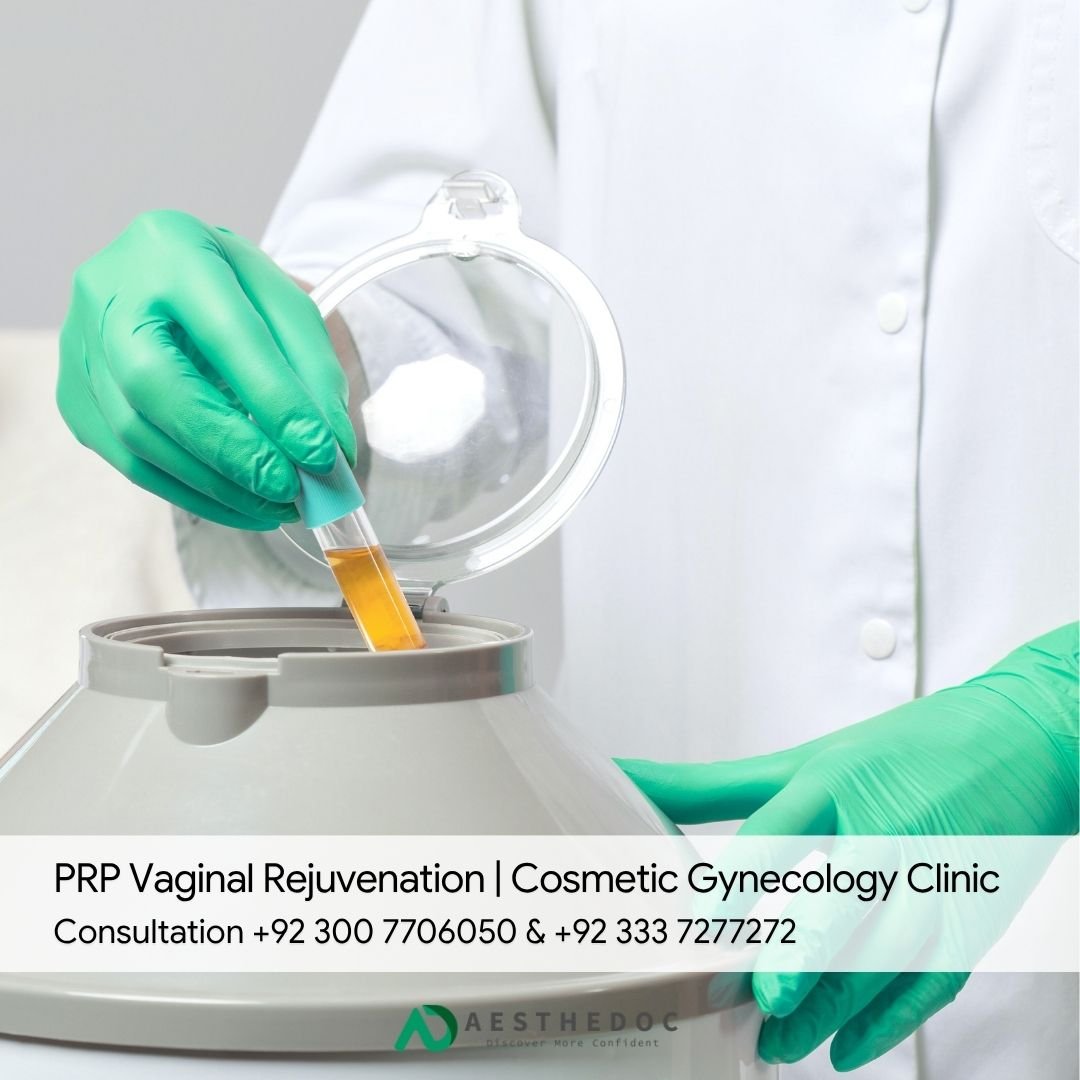
PRP vaginal rejuvenation is a regenerative aesthetic gynecology treatment that uses Platelet-Rich Plasma (PRP) derived from the patient’s own blood to improve vaginal tissue health, lubrication, sensitivity, and overall functional wellness.
This treatment is widely used in modern intimate medicine because it activates the body’s natural healing mechanisms without surgery, implants, or foreign substances. PRP contains powerful growth factors that support tissue repair, collagen production, and improved blood circulation in vaginal tissues.
It is often used as a standalone therapy or combined with other procedures such as laser vaginal rejuvenation or stem cell-based treatments.
Understanding PRP (Platelet-Rich Plasma)
PRP is a concentrated form of blood plasma that contains a high number of platelets. These platelets are rich in growth factors responsible for:
- Tissue regeneration
- Collagen stimulation
- Wound healing
- Angiogenesis (new blood vessel formation)
- Cellular repair
When injected into targeted vaginal tissues, PRP enhances natural biological repair processes.
What Is PRP Vaginal Rejuvenation?
PRP vaginal rejuvenation is a minimally invasive procedure where PRP is injected into specific areas of the vaginal and vulvar region to improve:
- Vaginal lubrication
- Tissue elasticity
- Blood flow
- Nerve sensitivity
- Overall vaginal health
It is sometimes referred to as the “O-Shot” when focused on clitoral and sexual wellness enhancement.
How PRP Vaginal Rejuvenation Works
The treatment works through natural biological activation:
- Blood is drawn from the patient
- Platelets are separated using centrifugation
- PRP is prepared in concentrated form
- PRP is injected into targeted vaginal tissues
- Growth factors stimulate regeneration and healing
Over the following weeks, tissue quality gradually improves.
Indications for PRP Vaginal Rejuvenation
This treatment may be suitable for women experiencing:
Vaginal Dryness
Reduced natural lubrication due to hormonal or aging changes.
Reduced Sensitivity
Decreased nerve responsiveness in intimate areas.
Mild Vaginal Laxity
Early-stage loosening of vaginal tissues.
Postpartum Changes
Functional or tissue quality changes after childbirth.
General Intimate Discomfort
Reduced comfort during daily life or intimacy.
PRP Vaginal Rejuvenation Procedure Overview
Step 1: Consultation and Evaluation
A full medical assessment is performed to determine suitability and rule out contraindications.
Step 2: Blood Collection
A small amount of blood is drawn from the patient, similar to a routine lab test.
Step 3: PRP Preparation
Blood is processed using a centrifuge to separate platelet-rich plasma.
Step 4: Local Anesthesia
A topical numbing agent is applied to ensure comfort during the procedure.
Step 5: PRP Injection
PRP is carefully injected into targeted vaginal and/or clitoral regions depending on treatment goals.
Step 6: Post-Procedure Care
Patients receive guidance for recovery, hygiene, and activity recommendations.
Recovery After PRP Vaginal Rejuvenation
Recovery is usually fast due to its minimally invasive nature.
First 24–48 Hours
- Mild swelling or sensitivity
- Slight pressure sensation
First Week
- Gradual improvement begins
- No major downtime required
2–6 Weeks
- Noticeable improvement in lubrication
- Improved tissue responsiveness
- Enhanced comfort
Results improve gradually over time.
Benefits of PRP Vaginal Rejuvenation
Natural Regeneration
Uses the body’s own growth factors for healing.
Improved Lubrication
Enhances natural vaginal moisture.
Increased Sensitivity
Supports nerve and tissue responsiveness.
Better Tissue Health
Improves elasticity and vascular support.
Non-Surgical Treatment
No incisions or stitches required.
PRP Vaginal Rejuvenation vs O-Shot
PRP Vaginal Rejuvenation
- Focuses on vaginal walls and lubrication
- Improves overall tissue health
- Broader functional benefits
O-Shot
- Focuses on clitoral region and sexual response
- More targeted sensitivity enhancement
Both use PRP but differ in application areas.
Risks and Safety
PRP therapy is generally safe because it uses the patient’s own blood. Possible mild side effects include:
- Temporary swelling
- Mild bruising
- Sensitivity for a short duration
- Rare infection
Proper sterile technique minimizes risks significantly.
PRP Vaginal Rejuvenation Cost (Fixed Range as Requested)
Estimated Cost:
PKR 100,000 – PKR 180,000
Cost depends on:
- Number of PRP sessions required
- Treatment area (vaginal walls vs combined O-Shot)
- Combination with laser or stem cell therapy
- Clinic protocol and equipment
International Cost Comparison
| Country | Estimated Cost |
|---|---|
| Pakistan | PKR 100,000 – 180,000 |
| United States | USD 1,000 – 2,500 |
| United Kingdom | GBP 900 – 2,000 |
| Canada | CAD 1,200 – 3,000 |
| UAE | AED 4,000 – 10,000 |
| Turkey | USD 800 – 1,800 |
PRP Vaginal Rejuvenation vs Laser Treatment
PRP Therapy
- Biological regeneration
- Improves sensitivity and lubrication
- Works at cellular level
Laser Treatment
- Heat-based collagen stimulation
- Improves tightness
- More structural effect
Both can be combined for enhanced results.
Psychological Benefits
Patients often report:
- Improved confidence
- Better intimate comfort
- Reduced dryness concerns
- Enhanced quality of life
Who Is a Good Candidate?
Suitable candidates include women who:
- Experience vaginal dryness or laxity
- Prefer non-surgical treatment
- Are in good general health
- Have realistic expectations
- Seek natural regenerative therapy
Meet the Surgeon
Dr. Nadiya Tariq – Plastic Surgeon
Qualifications
- FCPS (Plastic Surgery) – CPSP
- MBBS – UHS Lahore
Registrations
- PMDC – Active
- Irish Medical Council – Active
Consultation at Aesthedoc Clinic
For confidential consultation and personalized treatment planning:
+92 300 7706050
info@aesthedoc.com
A tailored evaluation helps determine whether PRP alone or combination therapy is most suitable.
-
 Surgeries8 months ago
Hymen Repair Surgery
-

 Cosmetic Gynecology7 months ago
Cosmetic Gynecology Clinic
-
 Cosmetic Gynecology8 months ago
Hymenoplasty in Islamabad
-

 Cosmetic Gynecology8 months ago
Hymen Repair Surgery in Rawalpindi
-

 Cosmetic Gynecology7 months ago
Hymenoplasty Cost Worldwide
-
 Surgeries7 months ago
Virgin Tightening Surgery Before and After Pictures
-

 Surgeries8 months ago
Hymenoplasty Surgeon in Rawalpindi
-

 Surgeries7 months ago
How Much Does Hymen Restoration Cost?